
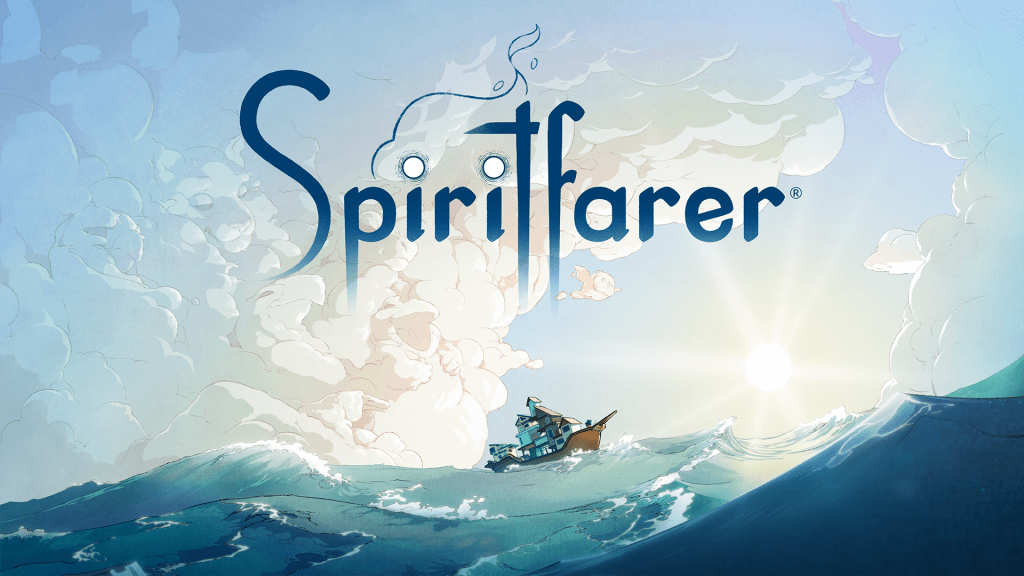
I was looking out for a farming type game, and to have made it an Indie game at that was something I viewed as a plus. Enter Spiritfarer, a game which markets itself as a ‘cozy’ game, where the end goal is managing a ship in a very typical property management sim alongside a very atypical cast of characters living on said ship. Though these characters are quirky, what’s truly atypical is how they’re meant to be managed: these are people who “died” and ended up in Purgatory. Playing as the titular Spiritfarer Stella, the player must essentially check off a bucket list to help these ‘Spirits’ pass on. Interestingly, while this game has no functional online multiplayer, it does feature local or, “couch”, co-op. This is handled fluidly and with no restrictions; one could play the entire game strictly by themselves, strictly with a partner, have some sessions be by themselves and some be with their partner, and so on.
I mentioned that I was looking for such a game. I ultimately found it at the recommendation of a friend by the name of Logan Writtenhouse, who thoroughly beat the game in 100%ing it and joined me for today’s piece to contribute his own thoughts.
On that note, let’s talk about what made Spiritfarer a quality game. Produced by the Indie development company Thunder Lotus Games, there is a bit to breakdown.
This game is very distinct
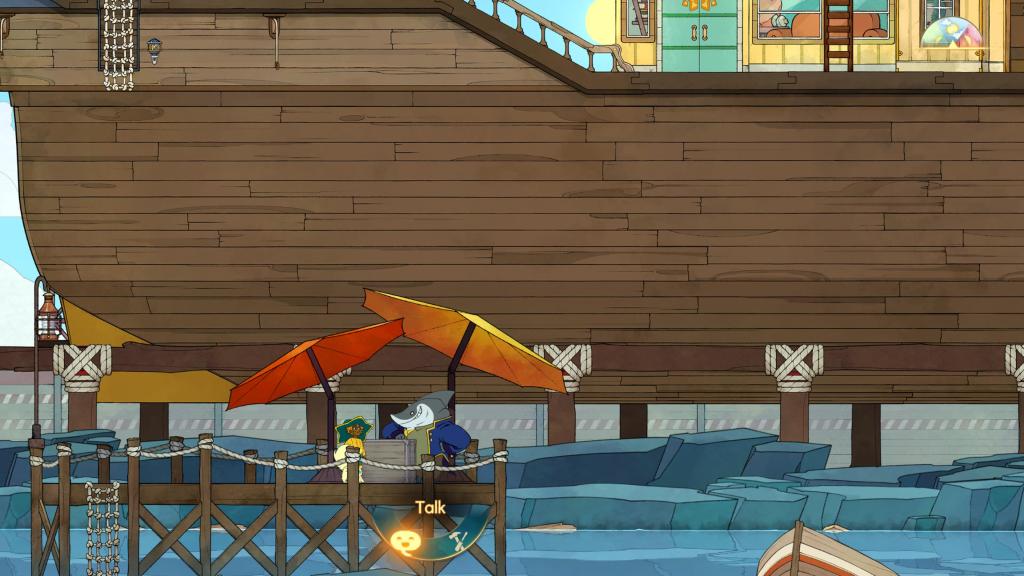
You cannot find another game out there and point to it as having influenced this one. The reason why is, as Logan pointed out, the Spirits in this game the player is meant to manage are largely based off of real life people who were in the Thunder Lotus Studios developers’ lives. In general, the premise of this game is fascinating: it’s a cozy game lacking in any sort of time sensitivity, where the goal is to help people accept their own death. Amidst the process, expect to learn each character’s favorite, least favorite foods, and get used to seeing a ‘hug’ animation play where Stella simply embraces a Spirit. Such a concept seems like an odd thing to base a “cozy” game around, but it plays into the ‘cozy’ niche very well in doing so.
Early game cast
Personally, I thought the cast of character in this game was on the relatively mediocre side. But, there are some standout entries. Gwen is likely most players’ favorite, and it helps that she plays the role of a de-facto tutorial character, showing the player some of this game’s bare essentials. Most are likely to appreciate Atul who, on top of always being silly and jovial, is extremely easy to manage the happiness of due to the fact that he likes any and all food that the player can prepare for him, making it easy to please him at mealtimes. Personally, I enjoyed the animate, upbeat Buck and the silly, quirky Stanley while I felt the married couple of Giovanni and Astrid simply had a lot more that they could have had to offer to the game.
Logan felt that the cast is very hit and miss, an emphasized that it is quite top heavy, backing up the idea that the best characters come in the earlygoings of the game. Logan pointed out numerous deeper details that the player really just has to play the game for a long time in order to truly appreciate. Logan felt that the less memorable characters ironically made themselves out to be more interesting. Logan compared his own experience as a healthcare worker with the experience the player has, managing people who are at varying, different points of their “decline” in a Hospice context.
Although the player really has to peer deep, this is a loaded cast which both Logan and I would agree is more than it seems at first glance. That said, personally, I felt the introduction to Astrid in particular in this game massively misled the player on what they should expect to see from her in her ensuing questline.
The Plot
The story in this game is a little bit of a slow burn, but there is a lot to it for those who are willing to take the deep dive. There is an enormous albeit oddly satisfying plot twist waiting at the dead end of the game, and the steps taken to reaching this particular twist also unravel a lot about the earlier stages of the game that may not have made much sense. In general, this is a fairly loaded game. Of course, it does advertise itself as a ‘cozy’ game, so it is entirely possible that the player simply gets lost in this game and its many low stakes features, which can push the narrative to the side.
For Logan, the plot is primarily what made the game memorable in drawing a number of comparisons between himself and the events unfolding in the game. Logan brought up comparisons, as someone who provides care to those that are essentially “waiting for their time”, similarly to Stella. Logan pointed out that in certain Nursing Homes or Hospitals, there tends to be a significant difference in how people handle knowing that the time of their passing is getting closer and closer.
Playing off of Logan’s remarks, the characters in this game indeed handle their own ‘death’ very differently. At the tail end of their ‘life’, the player is prompted to take them to the Everdoor, whereupon the character in question has 1-on-1 time with Stella, and will give a speech in parting ways with her. Some, such as Giovanni, will take the time to express their gratitude and ensure Stella knows he is “always there for you”. Others, such as Alice, will sadly lament their end and go out with more of a whimper.
The Ship
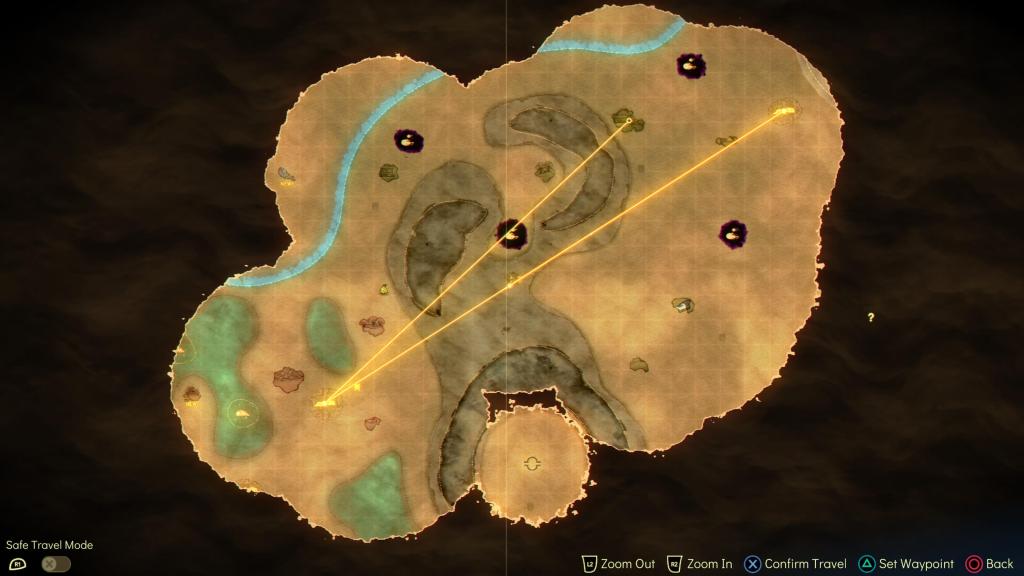
Personally, I found this to be arguably the coolest thing in this entire game. The ship just adds so much of a unique identity to this game in many different ways. The fact the player rides on a ship through water to get from town to town does genuinely make traveling seem and just ‘feel’ thrilling and interesting. The environment around the ship plays a big role in this game, sometimes presenting the player with mini-games, obstructing their progress or even just providing some nice, calming ambience. Personally, I thought it was really fun tinkering around with the navigation machine. It was really liberating being able to concoct any goofy, wild or funny looking navigation path and just cruise on the ship to the destination. The fact that this game is ‘cozy’ and has zero time sensitivity to speak of only encourages the player to play around with this more.
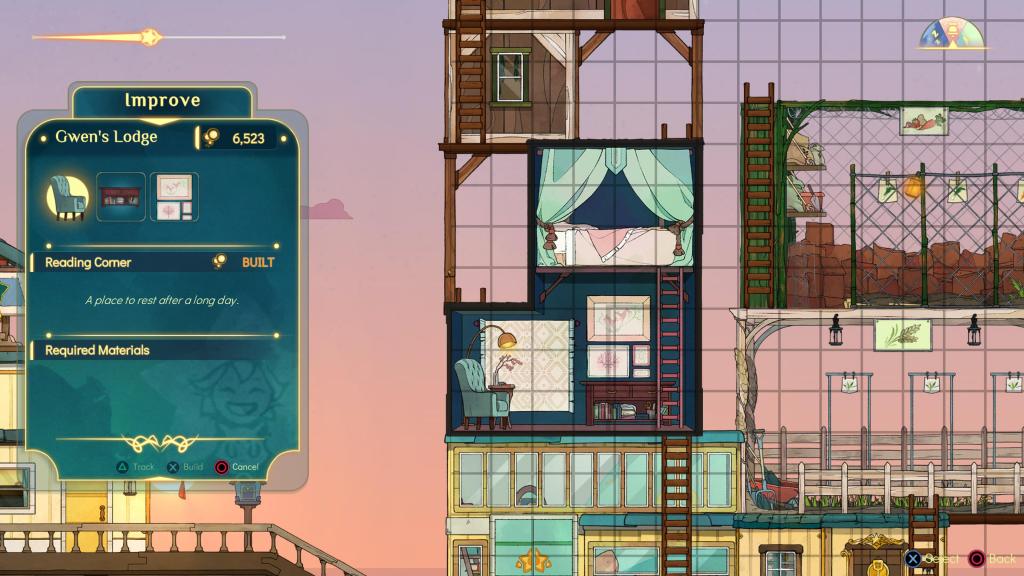
Logan commented that the ship resembled a “city builder” and was pleased that the game freely allows the player to traverse and interact with it at will. Logan compared it to managing a village and, considering the ship can hold utilities ranging from a farm to a windmill to a forge, an orchard and more, it is an apt comparison.
The following is a topic Logan and I weren’t deadset as to label “good” or “bad”. As such, consider it a ‘neutral’ topic of the game. I will leave it to you, the reader, to decide if this topic adds or takes from the quality value of this game.
Depth of Features and General Mechanics
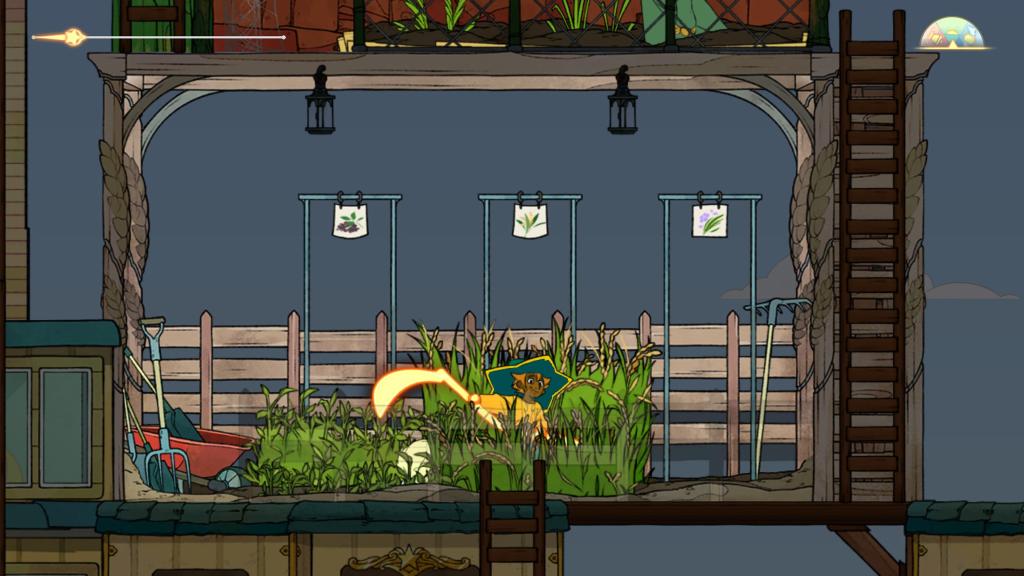
Before I tried this game personally, I did a brief run through and saw what other people thought of it. The number one complaint, by far, that people seem to have with this game is that it is loaded full of mechanics. There are several mini games, lots of different machines to farm or produce various essential materials, and a lot in general to memorize.
That said, I would argue that it borders the line, but does not cross it, in terms of providing mechanical overload. Thunder Lotus Studios cleverly made each individual mechanic mind numbingly easy to learn, to the point where there is no skill curve. By not forcing players to actually “get good”, the potential problem of overloading players diminishes. After all, how is it ‘mechanical overload’ if you can go two weeks without touching a mini game, encounter it, but be completely fine because all it asks the player to do is jump around and press a single button periodically?
On the other hand, this game does advertise itself as a ‘cozy’ game. So even if the mechanics are extremely simple, admittedly, there are quite a lot of them. One could competently argue that it defeats the point of a ‘cozy’ game if the player has to learn a lot, even if the learning is easy.
Logan felt that the game was a bit drawn out, though it should be noted that this comes from the perspective of someone who completely, 100% beat the game (for reference, personally, I did not 100% and simply made it to the end of the main game). Logan did bring up that he took advantage of this game’s local co-op features by playing it alongside his spouse, pointing out that if you play the game this way, you logically cut the workload this game imposes in half.
And that’s about it.
In the end, Spiritfarer didn’t win any Game of the Year awards, but there’s surprisingly a bit more to this cozy game than most others. It never falls into a particularly predictable, too routine schedule, so it avoids feeling too “simulator”-esque, which is a pit fall some cozy games fall into. As such, I’d give it a B. It’s a good game, memorable for the right reasons, but I don’t think it’s super replayable and it’s definitely on the niche side. Worth at least one playthrough for sure.
For Logan’s end, he opted to give the game an A-. Logan cited that this is a great game for people who don’t play games to get into, as they can easily stay invested without getting overwhelmed.





Leave a comment