
While it’s often interpreted as a sign of trouble, sometimes a film has to be blown up and rebuilt to be great. Even legendary directors don’t get it right on the first try — Stanley Kubrick’s perfectionism, for example, led to a record 148 takes for one scene in “The Shining.”
But I do think that knowing when to start over is something all great artists must know and be able to act off of. This is especially difficult in the context of the film industry, where reshoots can balloon budgets by millions of dollars and the box office has not fully recovered from the pandemic.


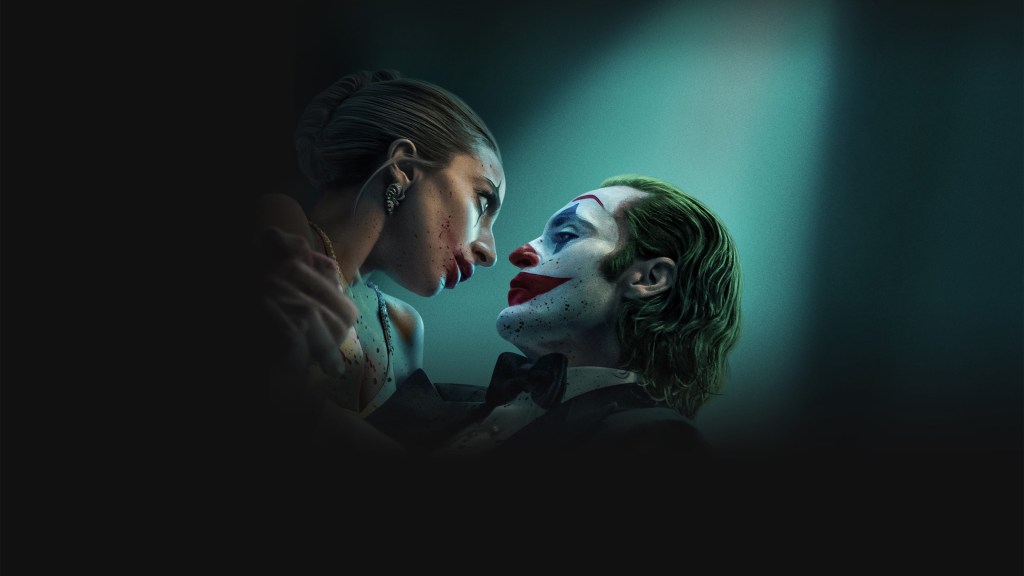
“Joker: Folie à Deux,” also informally known as “Joker 2,” follows up on the 2019 film starring Joaquin Phoenix that won him an Oscar for best leading actor with a unique concept: It’s a musical about delusion, love, loneliness and the celebrity the general public grants to those accused of serious crimes.
It also should have been brought back to the drawing board.
Arthur Fleck/Joker (Phoenix) spends much of the film locked up in Arkham Asylum awaiting his trial for the people he murdered in the previous film — including a late night talk show host on live TV. Arthur has gained popular support from his fellow inmates and the general public, who saw his act of violence as an act of rebellion against Gotham’s oligarchal system that only serves the rich and powerful like the Waynes at the expense of working people, who struggle in poverty.



Joker 2 builds off of this “burn everything down” sentiment, as Arthur uses his trial to further fuel the public’s hatred for the system itself that his lawyer, Maryanne Stewart (Catherine Keener), says failed him. He eventually turns the court into his own circus, notably when he fires his lawyer to represent himself in full Joker makeup and garb.
Director Todd Phillips, who also penned the screenplay with Scott Silver, has nuggets of great ideas for a “Joker” sequel here, the best one of which is how Arthur’s killings launched him into an anarchal icon. However, the film falls completely flat in regards to what Arthur chooses to do with his newfound power and influence — in short, he fumbles and is undone by his own internal struggle.
There’s also the matter of Lady Gaga, who plays Arthur’s lover, Harley Quinn. Harley voluntarily checks herself into Arkham to be with Arthur, emulating those who pine after, and eventually get romantically involved with, serial killers. I did appreciate how Phillips portrayed this relationship as hollow — Harley is a fan of the Joker, not Arthur — which also applies to those who support his killings. But she simply doesn’t belong in this film and she only serves to complicate its larger, more interesting concepts.





This also leads us into the movie’s cardinal sin: It doesn’t work as a musical. The numbers recorded separately for platforms like Spotify by Gaga are fine, albeit a little forgettable. But their execution in the film is awful, by both Phoenix and Gaga. Phoenix is not a singer and should have been overdubbed by a professional. Gaga’s performance, however, is solely a product of misdirection by Phillips — her numbers are conversational, raspy and uninspired, with her talents going almost completely wasted
The music itself is also poorly integrated and it clashes violently with the film’s tones and time period — we listen to music inspired by the 1950s and 60s in a dark, gritty setting inspired by 1980s New York City. It’s so ill-fitting that it actively drags the film down, rather than elevate it.
Joker 2 seems to be antithetical to everything viewers were expecting from a “Joker” sequel. Rather than fully embrace his identity as the clown prince of crime, Arthur falters, fails and is destroyed by his own bloodthirsty fans, who are reduced to a mindless mob rather than those who have been pushed to extremes by a city that doesn’t care about them. In fact, most of the first film’s economic message and the crushing weight of Gotham is mostly gone — thankfully it’s alive and well in “The Penguin” series.






Phillips also decided to largely retread the events of the first film via the trial rather than give the audience something fresh and new. Despite being internally labelled as the “trial of the century” and containing the movie’s most enthralling and intelligent commentary about this type of celebrity, it underwhelms.
Perhaps the most bizarre creative decision was Phillips’ casting of Gaga and inclusion of musical numbers that all took place in dream sequences. The first film racked up criticism for its unnecessary dream-like scenes where Arthur imagined having a relationship with his neighbor (Zazie Beetz), who was never really there. Instead of dropping this or properly developing it, Phillips doubled down.
Joker 2 is a wreck that’s hard to look away from. It spectacularly fails despite having every ingredient for success — Phoenix delivers a very good performance that could have put him in the running for another Oscar had the rest of the film not fallen apart, its cinematography is a huge step up from the first film and Gaga had more than enough talent to put the musical aspects of this film on par with what she brought to 2018’s “A Star Is Born.”
None of that was able to overcome foolish creative choices by Phillips, who bet big and lost. This film sets out to be a stringent critique of self-grandeur and the stardom society gives to violent criminals — especially those with sympathetic backstories — but it serves as a case study of a different type of delusion: Phillips’ own, as well as the executives at Warner Bros. that greenlit this poorly conceived sequel.
“Joker: Folie à Deux” gets a 5/10

 InReview
Leave a comment