
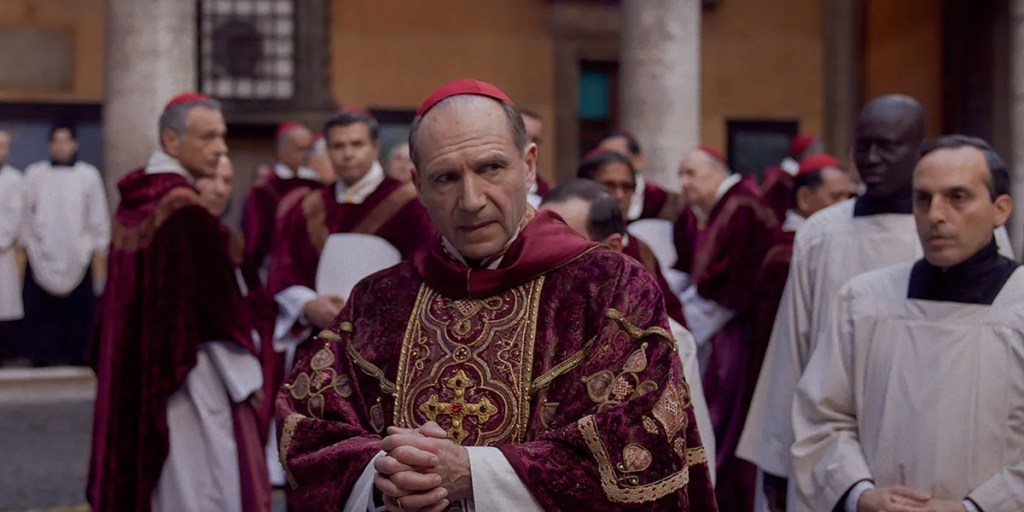
Have you every wondered what goes on behind closed doors when a new pope is selected? Director Edward Berger’s “Conclave” has got you covered.
The film portrays a fictional papal conclave of the College of Cardinals led by dean Cardinal Thomas Lawrence (Ralph Fiennes). During the conclave, cardinals are sequestered in the Vatican, and the outside world only knows if a pope has been elected if the color of smoke emanating from a chimney is white.










Despite its religious subject matter, faith is not the focus of the film; this is all about the politics that go into selecting a pope. Very quickly, cardinals form into political groups. There’s those that support the liberal Cardinal Aldo Bellini (Stanley Tucci), who doesn’t seek the papacy despite his popular support; the moderate Cardinal Joseph Tremblay (John Lithgow), who had a shady final encounter with the pope before he died; Cardinal Joshua Adeyemi (Lucian Msamati), who is a bit more conservative; and Cardinal Geoffredo Tedesco (Sergio Castellitto), who is radically conservative.
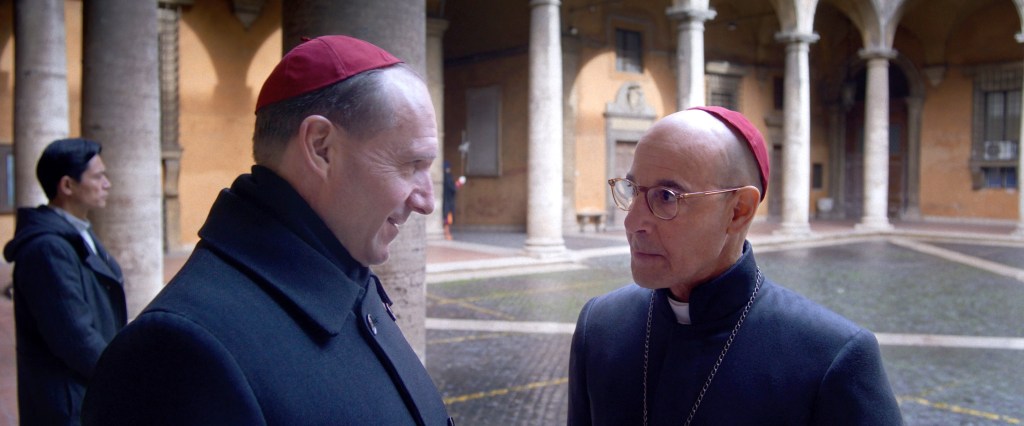
Almost immediately, Tedesco is branded a threat by Aldo and Lawrence, and they try to form a coalition to defeat him. However, they keep splitting the vote with Tremblay and Adeyemi, which only helps Tedesco.
Soon, Lawrence — who outright rejects calls for him to run and wishes to give up his deanship — gets enough votes to weaken Aldo to the point where he has to drop his bid altogether, prompting their coalition to then leap to Adeyemi.
It’s at this point that an important outsider steps into the spotlight: Cardinal Vincent Benitez (Carlos Diehz), who was almost denied entry into the conclave because he was made a cardinal in secret due to the danger of his territory (Kabul, Afghanistan). He rises quietly as all the other alternative to Tedesco eventually falter. But he comes into his own once a suicide bomber attacks the Vatican.


Tedesco offers a vision of hate and regression, urging the church to reject those of other religions and to fight back. Benitez, however, disarms him with his lived experiences of war. You can probably guess who became pope.
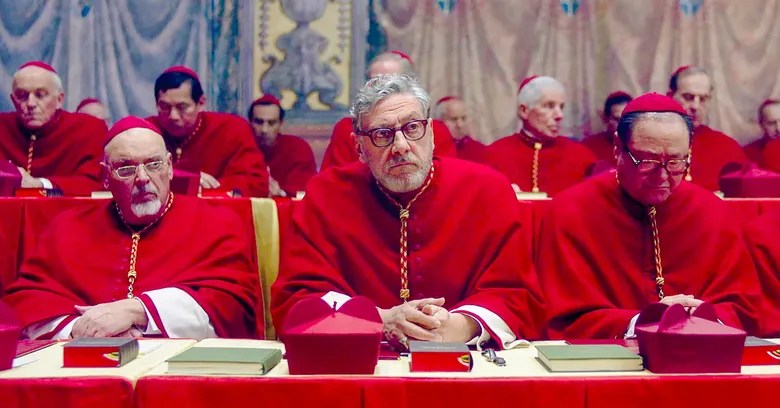
Benitez, interestingly enough, pledges to vote for Lawrence during the conclave, despite his protests. Given Benitez’ background, I think he sees Lawrence as the most fit to be pope because he doesn’t like or seek power; he views it as a burden that must be taken with the utmost care. And there are points where it feels like Lawrence will become pope. But he lacks the lessons only Benitez has, who has seen the worst humanity is capable of.
At about two hours long, there is plenty that could have been shaved off from the film, particularly the time it spent on dead-end candidates like Tremblay and Adeyemi. While I enjoyed the movie’s ending, I also thought Lawrence’s unwanted rise in the voting proved to be needlessly complicating and extraneous.



In a way, “Conclave” presents a vision of how politics should work: Where candidates present clear visions and the strongest one wins out. The pope in this film is elected because he rises to the occasion during a trying time; he doesn’t play into the cardinals’ worst instincts or deeply rooted prejudices.
There is also some striking and remarkable cinematography that takes advantage of the film’s unique location. However, most of it is shot in what looks like motel rooms, which makes the film look cheap.
Fiennes’ command of the screen managed to hold my attention throughout and held the movie together. His performance echoes that of his role in “The Menu,” albeit without an inch of the psychopathy of Chef Slowik. Lawrence is a manager, and he excels at it with subtle and impressive charisma. Lithgow and Tucci, however, proved to be distracting and forgettable.
With that being said, this film doesn’t have me clamoring for a rewatch, though I enjoyed its nuanced takes on leadership. It’s an average political thriller that I’ll probably forget about in six months.
“Conclave” gets an 8/10



 InReview
Leave a comment