

Are superhero films out? Have they gone the way of the Western?
“Deadpool & Wolverine” proves that the genre hasn’t sunset quite yet, netting an impressive over $1 billion haul at the box office as an R-rated movie. In fact, it’s passed “Joker” as the highest-grossing movie of all time with that rating.
Is it warranted? Or is the film a sloppy crowd-pleaser that will age poorly? Let’s get into it.

The film takes place after Deadpool/Wade Wilson (Ryan Reynolds) cleaned up the “X-Men” timeline at the end of “Deadpool 2.” The film opens with the merc with a mouth being hunted down by the Time Variance Authority — the interdimensional regulatory group that oversees the Marvel multiverse that was introduced in the “Loki” show. They have an issue with Deadpool desecrating the grave of Logan/Wolverine (Hugh Jackman) after (spoilers) he died at the end of “Logan.”
The movie introduces the concept of anchor beings — characters so important that their absence can destabilize their universe, with Wolverine being the one for the “X-Men” Universe. It’s a fun nod to the fact that Jackman’s portrayal of the character was always front and center and arguably powered those films — without Wolverine, it’s arguable that we wouldn’t have gotten 20 years of “X-Men” films. However, it’s also a paper-thin and convenient plot device to justify the team-up.



Out of options, Deadpool searched the multiverse for a variant (an alternate version) of Wolverine that is still alive that will help him, and he finds whom TVA Agent Paradox (Matthew Macfadyen) calls the worst one.
At its core, “Deadpool & Wolverine” is a redemption story of two antiheroes. Deadpool has been rejected by the X-Men and gets turned away by the Avengers in this film — before the TVA get involved in his life, he’s taken up a normal job. Meanwhile, the Wolverine variant he teams up with has let down his entire world by standing idling by when his X-Men were murdered. Both have starkly defined character flaws, making their rise and inventible atonement for their pasts not only relatable, but incredibly satisfying.
Paradox serves as our initial antagonist, but he quickly gets upstaged. He tries to recruit Deadpool in order to kill his world faster via a device known as a Time Ripper, but he rebels almost instantly when he learns that all he has to do is find another Wolverine to save his home. The two get “pruned” (sent to the Void, which a place at the end of time), where they meet the film’s better antagonist — Professor Charles Xavier’s secret sister, Cassandra Nova (Emma Corrin).

Nova is a direct foil to Xavier, being sadistic, manipulative and having none of his limitations, physically or morally. To her, the Void is a paradise in which she is the supreme ruler and people are her playthings.
The Void also serves as a means to introduce tons of cameo characters from Fox Marvel properties, including Wesley Snipes’ Blade, Jennifer Garner’s Elektra, Chris Evans’ Johnny Storm, Dafne Keen’s X-23, and Channing Tatum’s Gambit.
Deadpool and Wolverine join forces with these cameo characters, who are determined to get endings to their stories. Their involvement turns the film into this overarching meta commentary on the Fox/New Line Cinema era of Marvel and all the franchises that abruptly ended of never got off the ground during that time.
Before the MCU, not every Marvel project was a hit, but it’s clear that there’s still a lot of love for the comic book films of that era. That’s why people are excited to see Snipes, Garner and Evans back as their old characters. Tatum’s Gambit, on the other hand, serves as an interesting curiosity on what could have been — he was supposed to star in a standalone Gambit film that got canceled, and this is the first time he’s playing him on screen.




This makes this incredibly hard to analyze the movie on traditional merits (I use the framework of genre theory). This is more than just one story; this film is an event closing the curtain of 20 years of non MCU Marvel films. It’s a celebration and critique of it, as well as a smaller story about Deapool and Wolverine learning to overcome their inner demons and become the heroes they were told that they’re incapable of becoming.
The film is also pretty funny, but not moreso than the previous “Deadpool” films. It’s also not for everyone — Deadpool in particular is more annoying than he’s ever been, but the film uses that to its advantage by having him irritate Wolverine, who serves as the straight man.
It also takes full advantage of its R rating — it’s filled to the brim with slapstick and gore. Anything can happen in this film — except drug use, which Deadpool tells us is off limits per Disney.
If you’ve never been a Marvel fan and have not seen any of their movies in the 2010s and early 2000s, you will be incredibly confused at moments in this film. But I think Deadpool and Wolverine’s arcs are still strong enough to entertain those who don’t get all the references in this film. It does, however, keep it from being the best standalone story it can be and they do date the film.
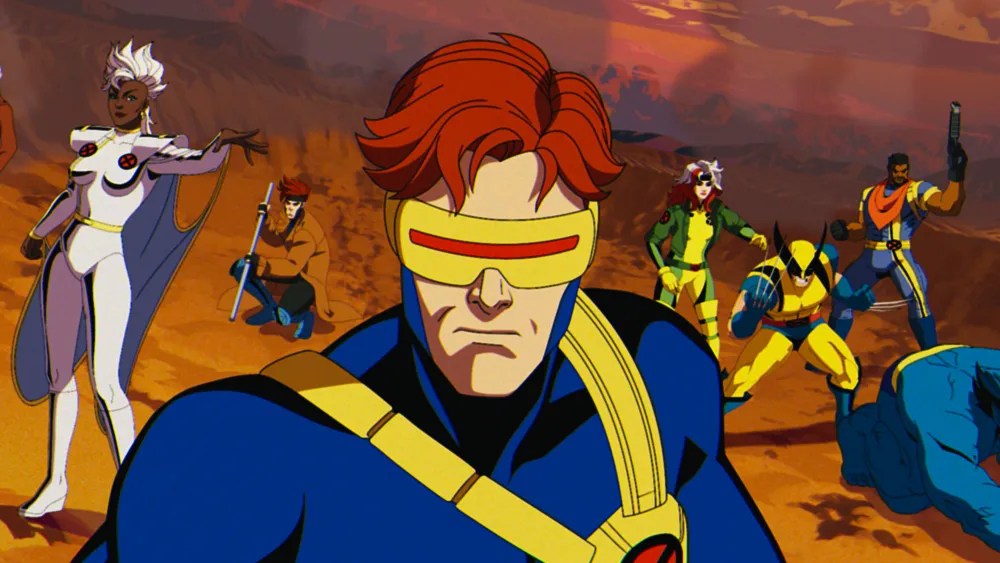


“Deadpool & Wolverine” stands above almost every superhero film since “Avengers: Endgame,” but it does not reach the upper echelons of the genre populated by works like “Logan,” “Joker,” and “The Dark Knight.” The only thing comparable to it is “Spider-Man: No Way Home” and “Loki,” and it’s a much more entertaining and tighter story than “No Way Home” but it can’t compete with the two seasons of excellent character development in “Loki,” which has perhaps the best scripts of any Marvel project post “Endgame.”
If you’re a Marvel fan, this is a must-see film. If you’re not, it’s still a great time. I highly recommend it, but please don’t bring young children to it — even with supervision, it’s not appropriate for them.
“Deadpool & Wolverine” gets an 8.5/10

 InReview
Leave a comment