
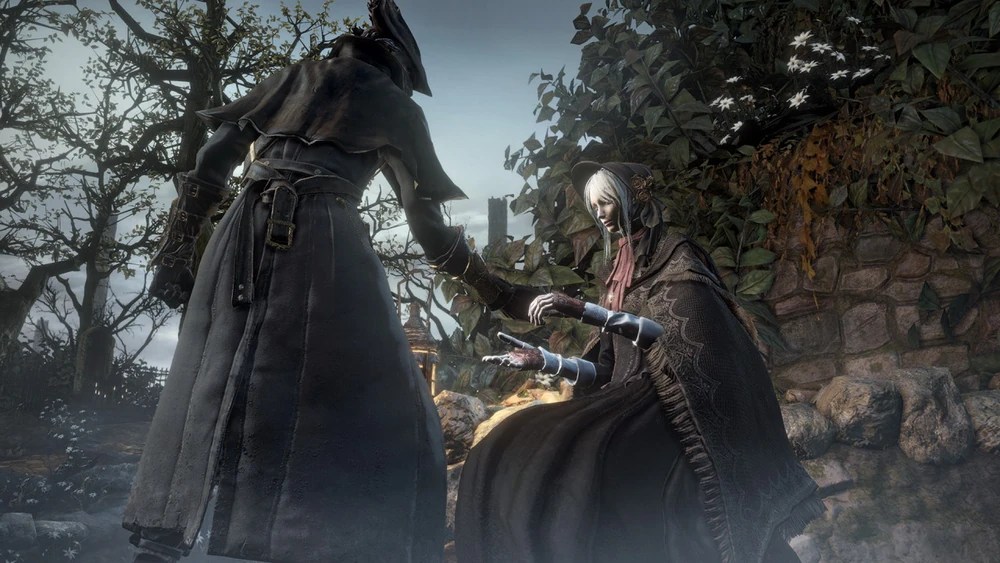
Return to Yharnam is in full swing. Many players have begun at least one character, some have engaged in cooperative gameplay, while some have enjoyed being more adversarial.
While Bloodborne may have less in terms of quantity compared to other Souls game, humorously, I would contend that it’s just as complex, sometimes even moreso, than its peers. Bloodborne is a deceptively deep game, coming from an era in which complex level design and playing for the long haul was actually commonplace across gaming. As such, it’s pretty easy to screw up in this game, just as it is to get to a point where it’s easy to enjoy the finer details within Yharnam.
Today’s article aims to discuss some simple dos and don’ts for your Bloodborne playthrough. It will be handled a little like it was during Dark Souls 2’s Return to Drangleic version.
Viewer discretion is advised for coarse language used in videos
Do: Develop the correct mindset
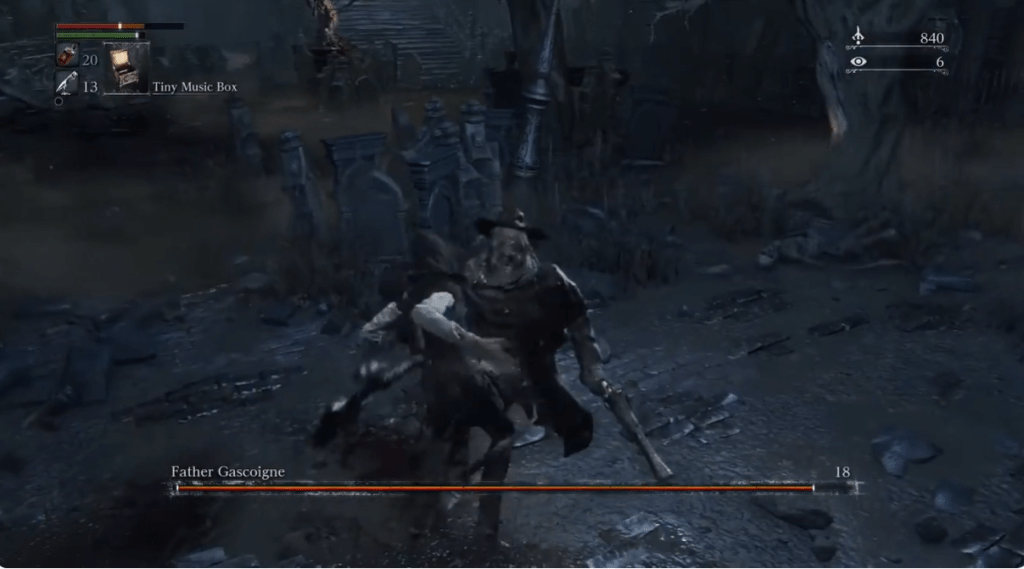
In the Dark Souls trilogy, you could easily get by wielding a huge greatshield and playing “bait and punish” all playthrough long, waiting for someone to errantly hit your shield uselessly to give you a clear opening to counter. This is my signature playstyle across games in general, like Predecessor or Smash, but in Bloodborne specifically, this playstyle is for the meek. There are no good shields in this game, and game mechanics in general encourage you to go on the offensive.
Somewhat unique to Bloodborne is a mechanic known as Rally. If you take direct damage, for a short period of time, you can actually heal back every drop of damage you take without having to expend any healing resources. By laying into the enemy enough, and quickly, you can render their hit null and void entirely. Trading blows actually can be the name of the game here- not to a truly reckless, brainless extent, but to the point where you shouldn’t be consistently waiting for the enemy to attack you first. Maneuvers such as dodge rolling towards the enemy, to get behind them, best set you up for aggressive gameplay.
Don’t: Rush Into The Unknown… Or At All
Elden Ring may have perfected this type of level design, but Bloodborne didn’t too shabby of a job at it and it came first. There are numerous spots in this game where a looming threat lies just around the corner, barely beyond immediate detection, who is trying to ambush you. In areas such as Hemwick Charnel Lane, these enemies could easily just quickly kill you if your awareness lapses too much. But just in general, keeping your head on a swivel is a good idea.
Do: Use Your Resources!
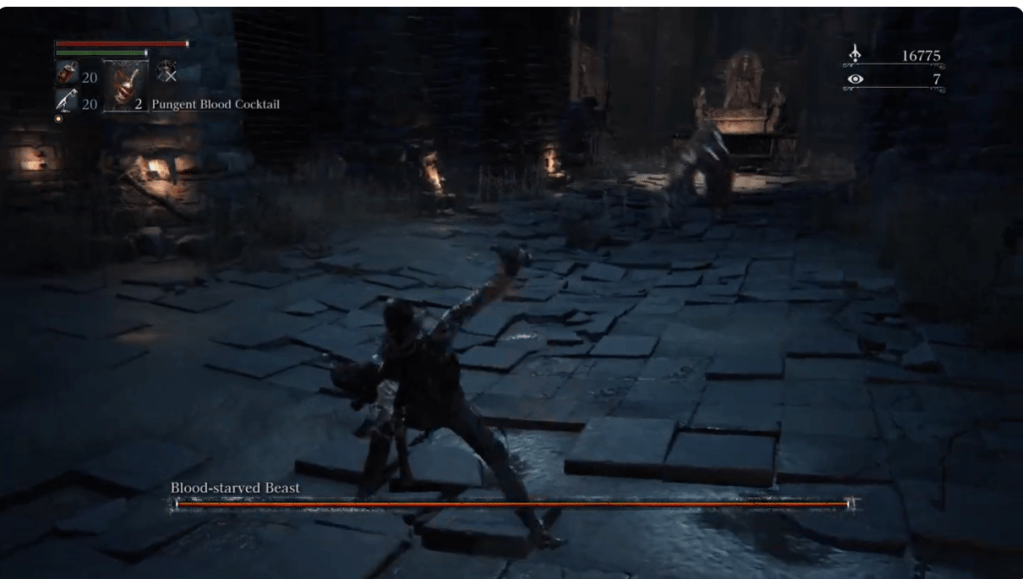
A little bit like with Dark Souls 2, but different enough, people just do not know how to use items effectively in this game. Item usage can make even more of a difference in this game, too. Not just super niche situations like packing Pungent Blood Cocktails to fight the Blood-Starved Beast, either. Molotov Cocktails may seem to simply be reskinned Firebombs from the Dark Souls trilogy, but they are just much more useful than that in this game, dealing credible damage and serving as an effective projectile for direct damage dealing. Fire and Bolt Paper play the roles of weapon-buffing Resins in this game, only they are simply much stronger and more broadly effective in this game. Heck, even the lowly Pebble can be incredibly useful, as a great means to provide indirect crowd control by letting the player selectively kill individual enemies one at a time, instead of having to face an entire group of enemies all at once.
Even seemingly mundane, useless items have a place in this world. Don’t overlook anything.
Don’t: Be Afraid To Play Dirty
This goes for both PvE and PvP, though it does err slightly more towards the latter. If you like to invade in PvP, don’t be afraid to use enemies to aid your invasion. With a couple very notable exceptions, players can’t be invaded unless they summon a friend, almost identically to Elden Ring. Because of this, when you invade, you will almost always be at a numbers disadvantage. In using the environment, you can improve your situation, as enemies will not target invaders and there is no Seed of a Tree of Giants to throw a wrench into things.
If you take social etiquette seriously in this game for whatever reason, here’s a good way to look at it. In duels which are pre-planned, both players should fight honorably, typically without healing, and typically without using cheesy, lame strategies. But in invasions, you are tearing your way into another person’s world without their consent. They are almost never going to fight you fair, as they’ll have a cooperator, and they are going to use their healing resources. They don’t want you to kill them and force them back to their last lamp. So, hide behind enemies here. Use healing items, or any item in general you have to hand. Shoot or throw things at them from out of reach if you can. Be as annoying, or as lethal and brutal, as possible.
And of course, in PvE, the AI doesn’t have feelings, so don’t feel bad about ‘cheesing’ enemies in this game. Especially this brutal NPC
Do: Fight The “Optional” Bosses

I argue that maybe only Elden Ring rewards the player more thoroughly for doing optional content, and that game has literal hundreds of optional bosses, more than quadruple the amount of optional bosses than Bloodborne has bosses, period, so that’s saying something.
Anyway, while the main story content of Bloodborne is amazing in its own right, I’d argue hands down the best this game has to offer is the side and optional content. Martyr Logarius and the Cainhurst Castle are the highlight, but even earlier than that, the Blood-Starved Beast and Old Yharnam are also amazing experiences. What’s more, the iconic Cleric Beast, beloved by Bloodborne players world round for a multitude of reasons, is actually completely optional; only Father Gasciogne is the truly mandatory boss in Central Yharnam. If you’ve played a few Bloodborne runs, doing Cleric Beast is so routine that you may not even realize it isn’t mandatory.
Please, for the love of Yharnam, explore the side content. Get curious. Look around every level this game has to offer. Not doing so is like eating a pizza without toppings; it may be good enough, but you can do so, so much better, and easily at that.
Don’t: Panic Roll
Now, the dodge roll in this game is really good and really fast, which has a tendency to make fearful players comfortable just mashing this button at the first sign of danger. However, as somewhat hinted at previously, this game rewards players who go on the offensive. Learning to play with calculated aggression will lead to more confident gameplay that naturally cuts down on the panic rolling. But even before then, if you’re not a master at initiating conflict, there is still almost never a reason to dodge roll more than once, maybe twice, at a time. Enemies in this game either do not attack quickly enough to warrant a second dodge, or they’re using attacks deliberately designed to punish panic rolling, so mashing that circle button will be just playing right into their hand.
Early game boss fights are excellent teachers of this. In particular, the Blood-Starved Beast has a couple different combo maneuvers designed to catch the player out for panic rolling. Other bosses, like Vicar Amelia and Cleric Beast, reward the player for dodging towards them and remaining relatively in place behind them.
Do: Develop An “Inner Clock”
This is still early enough in Soulsborne history where boss AI is not the absolute most brilliant. Bosses, and regular enemies, can be easily baited into using certain attacks or behaving in a particular way you can exploit.
Once again, early game boss fights provide ample opportunity for the player to get comfortable doing this. During the first phase of fighting Father Gascoigne , it is very easy to get him to step to the side while he fires his blunderbuss, and since he moves in the same way every time, you will eventually be able to know where he’s about to end up, plan on his positioning, and be ready with an attack to punish.
Every boss in this game, even the harder ones, has a “flowchart” – if the player does A, the boss responds with B. Learning to develop this inner clock and perfect your timing is key, especially when playing solo.
Don’t: Buy The Hunter Chief Emblem (If You’re New)

If you’re an experienced player and don’t feel like being bothered with a bit of legwork, feel free to buy this. But, for newer players who may be struggling with their Blood Echo economy as is, the Hunter Chief Emblem is a waste.
For those not in the know, this is a completely optional key item which can be bought at the Hunter’s Dream very early. It is easy to access and, on paper, the benefit is pretty incredible. An investment of 10,000 Blood Echoes will grant the player early access to the Grand Cathedral, which is an area they eventually have to go to anyway. So what’s the catch?
The issue here is that, again, this is a sink of a significant amount of early Blood Echoes for a “benefit” that isn’t necessary. Instead of spend the 10K to get to the Grand Cathedral, the player can defeat the Blood-Starved Beast, return to the Cathedral Ward to find an optional door has been opened, for free, and in thoroughly exploring this new pathway, they can eventually end up at the Grand Cathedral, Hunter Chief Emblem-free and with their 10K Blood Echoes still in tact.
Would ya look at that, a major expenditure rendered completely unnecessary by completing an optional boss fight. Who could have figured?
Do: Remember The Names “Amelia” and “Rom”

These are neither the hardest nor the most thrilling fights in the entire game by any means. The reason they have been highlighted is that defeating Vicar Amelia or Rom the Vacuous Spider has major consequences on the world of Bloodborne. Some questlines can be failed if proper legwork wasn’t done before killing one of these bosses. Major environmental changes take place when they’ve been defeated. For those interested in the lore, massive story developments take place as well.
The player doesn’t need to refrain from killing them per se, as they can’t softlock or even seriously inconvenience themselves in anyway here. But if looking to accomplish anything involving side content, primarily anything to do with any NPCs, it’s important to make sure your ducks are in a row before killing either of these two bosses.
Don’t: Waste Your Insight (Especially on Cooperative Playthroughs!)
In Demon’s Souls, Dark Souls 3 and Elden Ring, there is effectively no limit to how many times the player can summon or be summoned. In Dark Souls’ 1 and 2, there is technically a finite number of summons that can be had, but the player would have to die such a ridiculously high number of times for this to actually become a problem, that nobody will likely ever actually encounter ashortage of Humanities or Human Effigies.
In Bloodborne, things can get a little dicey in this regard, particularly in the early game. There is a currency displayed to the player at all times known as Insight. Insight is spent in order to summon other real players or NPCs. However, there is also a dedicated Insight shop within the Hunter’s Dream.
If the player ever runs out of Insight, they will be unable to summon their friends. As well, the Insight Shop sells quite a variety of things, but almost none of them are even all that good, much less truly necessary to buy. For example, you could spend 1 Insight to purchase a Pungent Blood Cocktail, but why would you do that instead of use Blood Echoes, which are vastly easier to come across, to buy them at the Messenger’s Shop instead?
Finally, if a player summons their friend to help with an area or a boss, but then dies before accomplishing it, they will need to expend a second Insight to re-summon their friend. If that same player dies ten times, they’d need to spend ten Insight summoning their friend repeatedly. Insight is much harder to come across in this game, and the only way to “farm” it would be to help other people kill bosses in their worlds, which is naturally going to prove an inconsistent method. As such, especially early game and especially on cooperative playthroughs, it’s absolutely imperative to be as stingy as possible with your Insight.



 InReview
Leave a comment