
I have played through this game, at this point, more than a hundred full times. A number of those times have been guiding newer players through the game, or playing through with friends or others I meet online. In that time, I can solidly say I have perfected the ‘optimal’ pathing for a general playthrough, and have also developed strong habits that make the game easy for me. Of course, I made plenty of mistakes to learn from to get there, and have seen others goof up plenty as well. Today’s piece addresses some pitfalls, as well as general rules of thumb, for one’s Dark Souls 2 playthrough. Hopefully this helps with those partaking in the ongoing Return to Drangleic 2026 event!
Let’s begin-
Do: Focus on Adaptability early

Are you planning to make a big, burly fighter type character? Perhaps an agile, fast swinging swordsman is more your style. Or spell-slinging is up your alley. Regardless of your intention for your build, whether conventional or silly and unconventional, Adaptability is your most important stat. Adaptability governs a number of things in this game, but by far the most important would be item speed usage and invincibility frames behind one’s dodge roll. Dodging and using vital items like Estus Flasks and Life Gems is a universal need that any character uses all of the time, making Adaptability the most important stat in the game. I would strongly suggest going straight to 20 Adaptability from the start of a playthrough, and that way you can proceed to ignore the stat for the rest of your character’s lifetime and focus your level ups on the real meat and bones of your character.
Don’t: Assume You Have Invincibility
This is the one game in the entire franchise which is very finicky on taking actions which ordinarily grant total invincibility in other Soulsborne games. As a general rule, don’t assume you ever have true invincibility. Even doing things like riposting an enemy you just parried do not completely protect the player from damage. As for fog walls, the player actually does obtain true invincibility, but only after the animation begins to feature the character actually stepping through the fog. For a few seconds at the start, as you’ll see from the above video, you are completely wide open.
Dark Souls 1 featured map designs which encouraged the player to simply throw caution to the wind and blitz through levels, ignoring enemies along the way. Dark Souls 2 aimed to hammer that playstyle out by taking away many of the protections players used to rush through levels.
Do: Understand Basic Math
No, you don’t need a PHD. Heck, you don’t even need to know high school level math to do just fine in this game. Relatively basic multiplication, in particular understanding how to multiply a number by 1.5x and being able to competently identify numeric patterns will suffice.
In this game, a Powerstance mechanic exists just like Elden Ring. Unlike Elden Ring however, in order to Powerstance a weapon, the player must have 1.5x that weapon’s requirement in Strength and Dexterity. So if you want to Powerstance two Greatswords, the 28 in Strength multiplied by 1.5x and the 13 in Dexterity multiplied by the same figure mean you’d need 42 Strength and 19 Dexterity to Powerstance it. Do note that Dark Souls 2 rounds down, so while 13 x 1.5 = 19.5, having a score of 19 will suffice.
Leveling up any of the player’s stats will cause something to rise. For example, Adaptability as mentioned earlier grants the same, predictable flat bonuses to Agility along with the player’s resistance to Bleed and Poison. If the player wants to meet certain benchmarks of a particular resistance or other attribute, they can do so with basic numeric patterns. Every stat in this game has a ‘soft cap’ in which gains will stop being consistent, but these soft caps are never reached until very late in a player’s playthrough anyway.
Don’t: Waste Early Fragrant Branches of Yore

From the start of your playthrough, make a mental note to save Fragrant Branches of Yore for the following- opening up access to the Ruin Sentinels in Lost Bastille, opening access to the Shaded Woods and unfreezing and unlocking the services of Straid of Olaphis. That’s three Fragrant Branches of Yore. If you have not done those three things and do not have enough Fragrant Branches of Yore to eventually go and do them, do not use Fragrant Branches of Yore on anything else.
Do note that the player can’t misuse this item to the point of actually locking themselves out of any particular content. However, early game, some of them can be annoying to come across. There are three Fragrant Branches players can grab and hold onto, so that they can use them as efficiently as possible, then go and spend them more fluidly once they’ve achieved the three checklist locations I listed above. Come the late game, the player will be picking this item out of their teeth, and can use them on whatever they want fearlessly. I would say, before all four Old Great Ones have been slain, think twice before using a Fragrant Branch of Yore.
Do: Buy Important Utilities Early
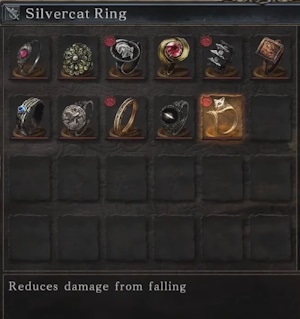
Piggybacking off the last subject, Dark Souls 2 does throw a lot of Souls and level ups at the player. While it may be tempting to just dump these all into level ups, there are some “bills” the player should also be paying too. The Name-Engraved Ring is especially important for co-op playthroughs. The aforementioned Fragrant Branch of Yore can be purchased off an early game merchant, representing the easiest chance to acquire one. Other utilities, such as the Ring of Whispers right before going through Shaded Ruins, the Silvercat Ring before trying to go down the hole in Majula, and more, are just things players should be mindful of before dumping all of their Souls haphazardly into something.
Don’t: Split Petrified Dragon Bone Usage

Petrified Dragon Bones are an upgrade material used to power up Boss Soul weapons, equipment acquired from trading a Boss Soul in to either Straid of Olaphis or Weaponsmith Ornifex. Unlike Titanite Shard/regular weapons and Twinkling Titanite, Petrified Dragon Bones are extremely annoying to farm in the base game, mandating a trip to the DLC for a reasonable chance at getting some. In terms of natural Petrified Dragon Bone drops, the player cannot loot enough of them to fully upgrade more than a single Boss Soul weapon. As such, the player must ensure to truly commit to just the one Boss Soul weapon, and after sinking some Petrified Dragon Bones into that one weapon, no second Boss weapon should be chosen until the next NG+ cycle.
Do: Kill The “Correct” NPCs

Some NPCs are sacred and should be left untouched, an obvious example being the Emerald Herald. However, spilling some NPC blood can be greatly beneficial to the player. Maughlin the Armorer is the best example of such an NPC. When killed, he drops the full Tseldora clothing set which, when equipped, causes the player to earn significantly more Souls for killing enemies.
Another example of an NPC players may consider killing early is Crestfallen Saulden. Saulden, when killed, drops the Ring of Steel Protection. This is a really good ring, especially in the early game, and especially since the player doesn’t have to give anything up other than the opportunity to join the mediocre Way of Blue covenant to get it.
While there are numerous NPCs the player can consider killing, one very strong choice would be Blue Knight Targray. Found in the Blue Cathedral in Heide’s Tower of Flame after killing Old Dragonslayer, Targray drops the Blue Knight’s Halberd when killed. This is inarguably the single best weapon in the entire game.
If ever in doubt over whether an NPC should be slain or not, resources such as Fextra Life or the Dark Souls 2 Wiki should guide your decision. Do not be shy about removing NPCs for good gain, but of course, be careful not to butcher someone needlessly or without thought.
Don’t: Needlessly Hoard Resources
Naturally, players are good at properly using Life Gems and Estus, since they will die if they aren’t. However, I do not think I have ever met a player who knows how to properly and efficiently manage their item count past maybe the mid game. It isn’t an easy task, especially for brand new players. That said, Resins, Brightbugs if you’re solo, throwable damage items like Throwing Knives, this stuff gets even more useful as the game gets harder. Especially with the advent of permanently refillable buff spells in this game, Resins are expendable, but very useful.
Hypothetically, you might be playing a melee focused character and wondering how the heck you will ever get value from items like the Amber Herb. Fret not! The Lonesome Gavlaan NPC is a perfect, beneficial means to scrap any truly useless items by way of selling them. Thus, between Gavlaan’s utility and the myriad of opportunities to use items, players should never have a seriously cluttered inventory.
Do: Come Back Later
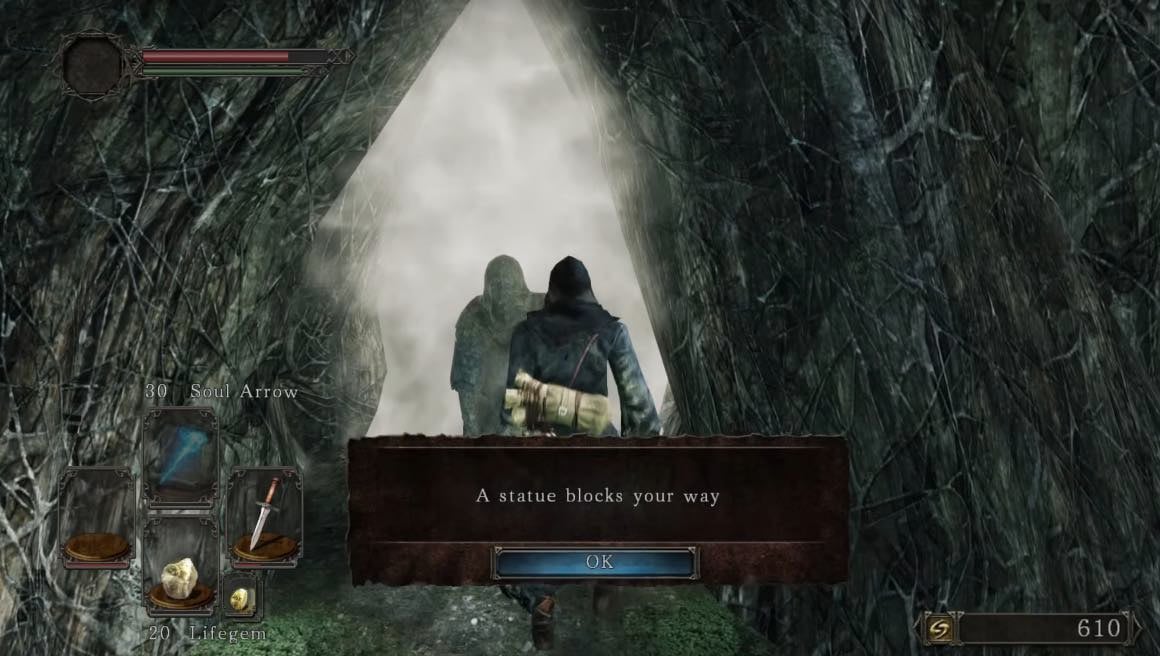
This is more prevalent in the early game, pre-Four Old Great Ones, but is relevant nonetheless. This game is riddled with incentive to backtrack. The player is intended to, down the road, pick up key items which were meant to expand on earlier game areas. For example, once the player reaches the mid game and acquires the Iron Key, they are encouraged to return all the way back to the Forest of Fallen Giants, where a door matching that key can finally be opened.
Don’t: Overestimate Estus Flasks
On paper, Life Gems are meant to be supplementary. They’re supposed to be a secondary form of healing to Estus Flasks, and it’s clear From Software intended things to be this way. However, Life Gems are a more reliable, flexible and versatile source of healing than Estus in every single way. Life Gems can be consumed while moving, they can be used to heal off damage the player is about to take due to how slow they operate, and the player can hold 99 of them compared to 12 Estus Flasks. Because of this, Estus can be nice to have and has its place in the game, but it is far, far less prominent than its counterparts across the rest of Soulsborne. Do not feel like you need to break your back picking up Estus Shards and Sublime Bone Dust. Put that same effort towards keeping topped off on Life Gems.
 InReview
Leave a comment