

In the world of today, there are plenty of video games out there to keep one’s attention. But, a lot of those games can be fairly expensive or will attempt to draw the player in with limited time events for the long haul. To break the mold a wee bit, I would like to introduce a new series to InReview I am titling My Indieventures. Exploring games produced by smaller, independent organizations.
Indie games are more important than ever these days. In an era where video games are becoming increasingly plagued with generative artificial intelligence, bad faith shareholder influence and more to inhibit the experience, Indie games remain the same, faithful, authentic product as always.

For my very first Indieventure, I would like to take a look at the independent Playstige Interactive. Today, I’ve plans to review three individual pieces from Playstige. But after enjoying one title in particular which this article will get to, I’ve plans to explore Playstige’s entire catalogue, and will most likely publish pieces on them on InReview in the future.
Perhaps most surprising and impressive about Playstige, is that it is entirely owned and operated by one single man! Baris Tarimclogu is the solo publisher and developer for Playstige.
Today’s article touches base on three Playstige titles: Crimebound Chronicles, Dragon’s Dungeon and Daylight Dread. I’ll be writing the reviews in order of which game was played first to last, but it’s worth noting that I actually played them in the direct wrong chronological order (on accident!), as the latter released first, followed by the former two. As previously mentioned, they were developed by one person. These games are also extremely cheap, currently existing on digital shelves for around $1 apiece. As such, comparing these games to AAA titles feels silly. Of course, a spade is a spade, so if the games are bad, I will make sure to say so. But the review will be conducted through a softer lens than usual.
Let’s begin. Only, unlike usual, I will individually address the three listed games, generally, as opposed to dedicate time to pros and cons.
Crimebound Chronicles

In this Full Motion Video, players are meant to take a look at three different murder investigation cases. Players are given loads upon loads of details about various suspects in each murder. At the end, with all information intact, players are then asked to choose who they think the true culprit is.
I’m someone who really enjoys games that delve deep into the inner machinations of the law. This game is what caused me to essentially ‘discover’ Playstige initially. As I said earlier, I really do aim to be gentle with these games when critiquing their shortcomings. But, I also have to rip the bandage off real quick talking about this game.
Even for an Indie game, I’m sadly going to have to say Playstige missed the mark here. There is no actual game to be played, and nothing happens at the end of each investigation whether or not the player correctly chose the culprit. Cutscenes just play, as if unfeeling and uncaring for player input.
The cutscenes to be played sadly don’t convey much worth watching either. The entirety of this game’s narrative setup is shown through dialogue lines, given at a bizarrely high sound volume, with merely loosely related at best B-Roll playing in tandem. Sound design is unfortunately really bad in this game, which may explain the default usage of closed captioning throughout the game.
On the other hand, these crime cases have a lot of detail sunken into them, and following along with them at first was pretty interesting. The intrigue is ruined fairly fast after the first investigation, but at the very least, the stories themselves were somewhat interesting to follow.
All in all, I’m a tad surprised this game released after the games left to be discussed in this article. This feels like the sort of game that an Indie or solo developer might kick-start their career with, but this game actually launched towards the middle of 2025, sometime after quite a number of Playstige titles. That said, I don’t feel too bad giving this game a D-. I really hope this is the lowest of lows to be seen from Playstige.
Dragon’s Dungeon
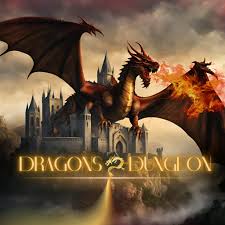
Ask anyone who knows me, dragons are a major interest of mine. At home, I have two huge cabinets filled to the brim with dragon statues, toys, tools, comic books, all manner of trinkets. Like Crimebound Chronicles, the premise of playing as a dragon for a game as cheap as this was pretty appealing. Expectations were naturally tempered.
Compared to Crimebound Chronicles, there is at least a game to be played here. In fact, this game offers two different modes, with one thrusting the player into action as the dragon on the game’s cover, and the other prompting the player to instead play as a weary traveler passing through a plague ridden village.
The Dragon mode feels more like a tech demo. The dragon itself looks cool and the landscape it is used in looks vast and pretty decently designed graphically. But, once loaded in, players are prompted to fly their dragon across the land, burning towers and braziers to the ground. There are essentially three important functions when playing as the dragon- flying upward or downward to get close enough to a tower, flying in the direction of said tower, then pressing a single button to breathe fire atop it and raze it entirely. The one crippling flaw this mode poses is that the landscape is rather huge, and the dragon flies extremely slowly with no means of acceleration. Graphically, it looks pretty neat, and burning down the first tower or two is admittedly pretty fun. Spending whole minutes slowly gliding through the sky trying to reach a tower on the dead other end of the map I overlooked is not so thrilling.
The Blacksmith mode is the game’s other playable feature. Here, players play as a traveler witnessing an abandoned village. The player is invited inward to examine notes and other environmental clues that may explain why the village was abandoned. The map is smaller than when playing as the dragon, and a good bit more of an actual narrative is conveyed here. It comes at the cost of player interaction, as there’s nothing to really do other than go around the village and search for clues on what happened, pick them up and briefly read them, then move on. There is a minor amount of dialogue at the end that gives very little meaningful closure.
Overall, this game was pretty much worth the very low asking price. That said, remaining kind towards it having been developed by a single person, I must assess this game with a D. This is not too far off being a video game version of Dragons On The Hill, a movie reviewed here on InReview. That’s meant in the sense that Dragon’s Dungeon should be shown to aspiring game developers as a “foot in the door” type piece to inspire individual game developers, but as a standalone game, this game is pretty forgettable.
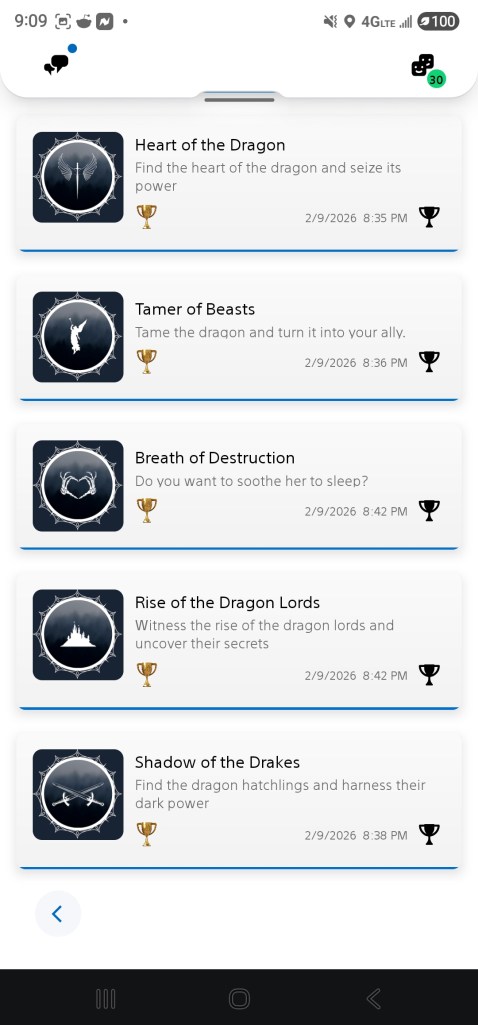
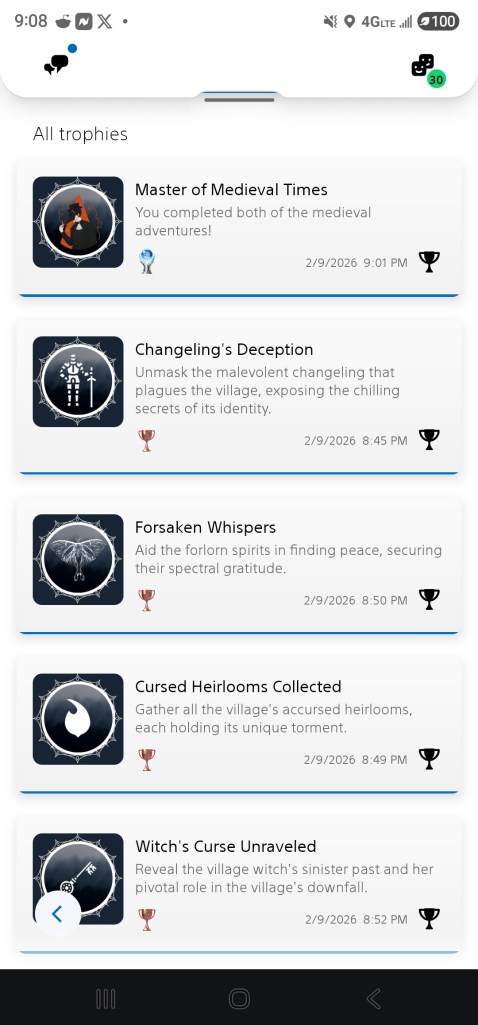
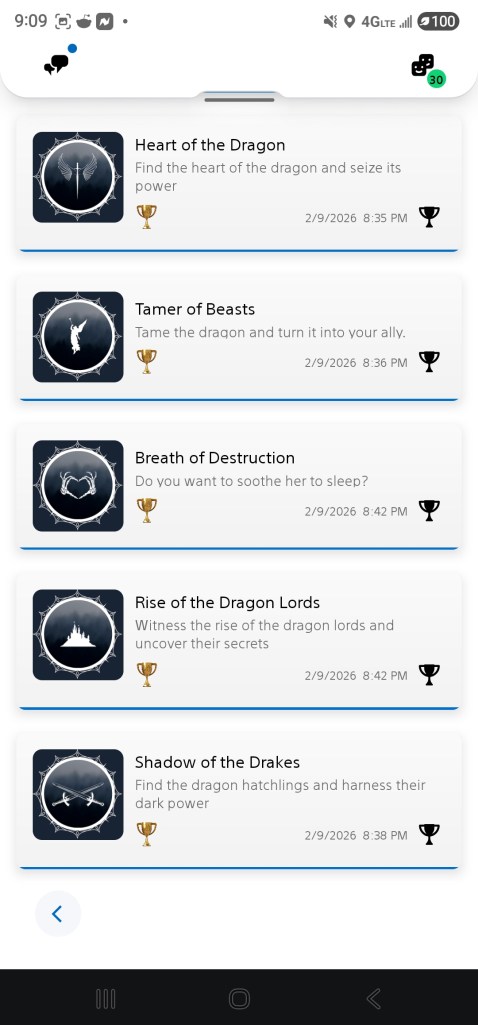
On a lasting note, it has to be said that these PlayStation trophies tied to the game are… Dubious at best. I promise, the game does not let you do one tenth of what these trophies make it seem like you’ve done. That’s a bit of a baffling design choice.
Daylight Dread
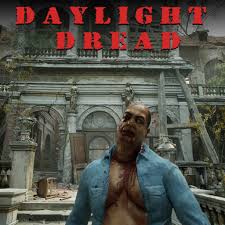
This was easily the best game of the three discussed today. As well, I finally get to say: for an Indie game, and a game that cost a whole one dollar, this one was even pretty great. The premise of this game is just as simple as the previous two. Here, the player traverses the crumbled remains of a once lavish looking property, and they’re tasked with finding and eliminating nearby zombies.
Straightaway, the thing this game does best by far is establish a perfect horror atmosphere. The soundtrack is really dark and ominous, the zombies themselves were really creepily designed and perfectly sound the part, and the decrepit structures players explore was deceptively good at accommodating this. You will not make it, start to finish, without experiencing a multitude of jump scares and at least one “oh crap oh crap oh crap!” moment.
Surprisingly, gameplay in this one is pretty solid. Sure, this game’s frame control is a little on the wonky side, but it never seriously proves detrimental apart from maybe being slightly cumbersome to work with. This is a first person shooter game and, though the player is only given a meager, basic pistol, it functions surprisingly well. The only gripe I’d have in this regard is that the character moves really slowly, and controls are not conveyed very well to the player, so learning how to actually consistently sprint was surprisingly tedious.
Overall, considering the context this game was designed in, it gets a B. I would genuinely recommend this game to anyone, as it is very short, very simple and clearly achieves what it set out to achieve…
…maybe just be careful how you maneuver about the world in the game.
On the whole, Daylight Dread was what inspired me to take a deeper look at Playstige, and what has inspired me to browse the rest of their catalogue. Look out in the future for reviews on titles such as Dreaming Canvas, Jigsaw Solace, Fluxteria, Blastful, Memory Lane, Bodycam Gang Zone and more as we forge ahead with My Indieventures!

 InReview
Leave a comment