
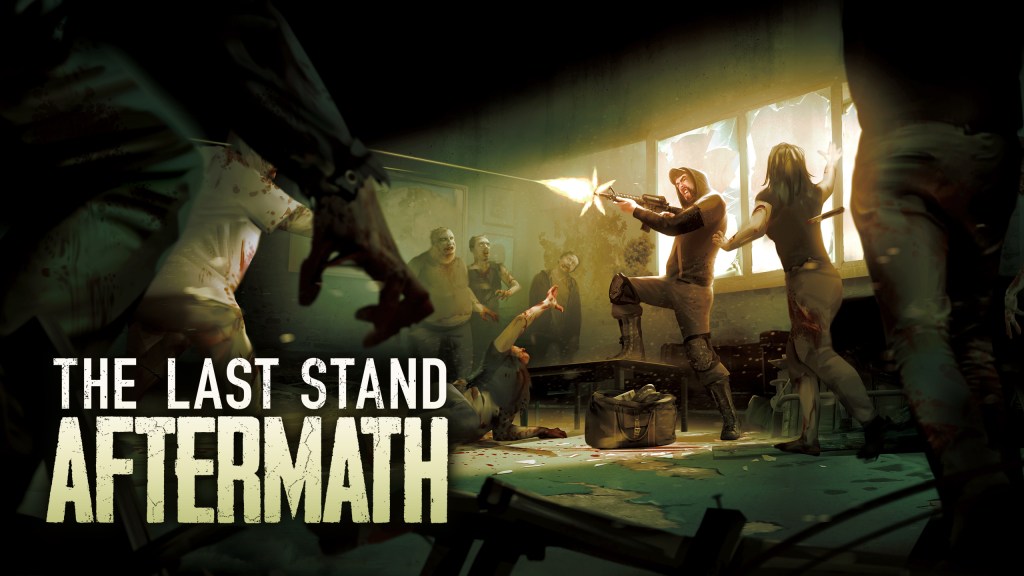
In the mid 2000s, a flash game franchise known as The Last Stand came to be. This was just when zombie games in general were starting to catch fire, putting the franchise in a great place to succeed. The first game was a very simple series of defense mini-games where the player held out against the progressively worsening waves of undead. The second game, The Last Stand: Union City was a far more complex apocalypse-themed RPG which was an absolute smash hit. Several years later, The Last Stand: Dead Zone released. This was an online multiplayer RPG which had its time in the limelight, but ultimately flamed out and shut down its servers a few short years after launching. If you’d like some proof at just how impactful this game was, a series of fans have come together as of very recent to revive the game, rebuilding it as it once was.
While fans have converged to rekindle the magic of this franchise’s online multiplayer presence, Con Artist Games was busy with their own agenda for Last Stand’s universe. In November of 2021, Last Stand: Aftermath released. This is a strictly single player game with a very fresh new take for the franchise, as it aimed to be a rogue-lite game. For those not in the know, a rogue-lite game typically puts the player through procedurally generated ‘dungeons’ of sorts which are meant to get progressively harder. The player is meant to be weak early and die often, but they’ll accumulate small permanent gains to their character with each run that will extend how far players can survive each run, until they are eventually able to make it all the way to the end in one fell swoop.
One of the better parts about this game? In spite of its storied history, this franchise is actually developed wholly by the independent studio, the aforementioned Con Artist Studios. So, this is indeed an Indie game. Despite the admittedly funny name for a development company, they haven’t actually ‘conned’ anybody out of anything other than play time for a different game.
So, how did this revitalization of the franchise go? Let’s take a look, starting with what went well.
Core Gameplay
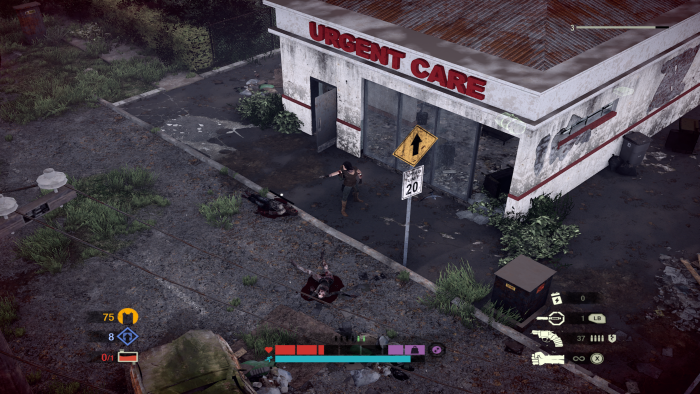
This is a rogue-lite, so core gameplay is absolutely vital to a quality experience. This is the case for any game, but even moreso in a game that is going to ask the player to essentially repeat the gameplay loop over and over and over again until beating the game. This game handles core gameplay pretty well, doing a good job at both giving the player a long term goal to work towards, and supplying several, if not dozens of side objectives or things to do on the side along the way. The game is overall very well balanced, as there aren’t any guns or melee weapons which feel too weak or too strong in the context of when they’re received, and the more satisfying and lethal weaponry is fittingly received when the player has earned it, making the game feel rewarding.

Additionally, the Supply system is very strong in feeding into the game, and letting the game feed into it. When interacting with an NPC named Trinity at base, she can allow the player to unlock permanent upgrades with an in-game currency called Supply. These upgrades are mostly beginning games with new equipment; it is very satisfying to go from starting with nothing, to starting with a weak six shooter, into starting with a sawn off shotgun into a so-so sniper rifle, then finally an excellent submachine gun along with meds, utility tools and items needed to craft things with. It’s a system that encourages thoroughly searching areas while playing the game, that also makes thorough gameplay easier to access in itself. Overall, the Supply currency and Trinity NPC were probably the best part about this gameplay loop, doing a fantastic job holding it together.
Progression
This was briefly touched on when discussing Trinity and the Supply system. But, the NPC named Radar and the Knowledge system are just as impactful to making the game move along at a brisk pace. Similarly to Supply, Knowledge is a currency that essentially exists to level the character up, providing permanent boosts to their performance in the game. These benefits are well balanced, strong enough to be meaningful and helpful as the game gets harder, but not so strong that anything feels like it’s turning god mode on.

Speaking of which, the game gets meaningfully harder as the player continually advances through levels. There are a total of four zones: Suburbs, Mountains, Sunken City and Hell. Each of these zones has a variety of points of interest, unique or new mini-boss enemies, plenty of story content to throw a wrench in the player’s plans, and more. Like everything else, the settings are quite balanced, and the player will never find themselves in an area they aren’t ready for. Yet, when arriving initially, it will also scarcely feel as if the player is doing much more than treading water at best.
Combat

This game’s mechanics are simple to a pleasing degree. It is from a bird’s eye view, which generally does mitigate just how complex a game’s systems are allowed to be. This one strikes a perfect balance between giving the player everything they need, while getting the hell out of the way and letting them do what they want relatively, without needless restrictions, a litany of silly cooldowns or anything like that. This is a zombie apocalypse survival game, and it offers the player everything and anything one could possibly think to want with that context in mind.
On top of that, combat can get generally pretty exciting in some moments. Chief among them are H.E.R.C facilities which, when interacted with, ring a very loud alarm attracting all manner of undead, but grant access to some pretty sweet loot in the process. The situation typically presses said loot right into action against a crowd of angry, feral zombies.
The Story

This game boasts a pretty cleverly written, interesting story that harrows over the player’s head all playthrough long. The premise is that the player is playing as a character (eventually, dozens of different characters) who is doomed to die from the zombie virus. Instead of live their last days out in private, these survivors at camp have chosen not to go out gently and venture into the city to help scientific advancement as well as acquiring useful tangible items to help the camp before they finally kick the bucket. The end goal eventually becomes reaching a laboratory in Hell to become a guinea pig, testing out a cure to zombieism that was developed at this laboratory. Reaching this goal and then testing out the cure does eventually lead to a pretty satisfying conclusion that tied the story together nicely, while also granting infinite replayability to the player. Overall, a pretty strong showing and telling.
Jack Cameo Appearance/General Story Continuity
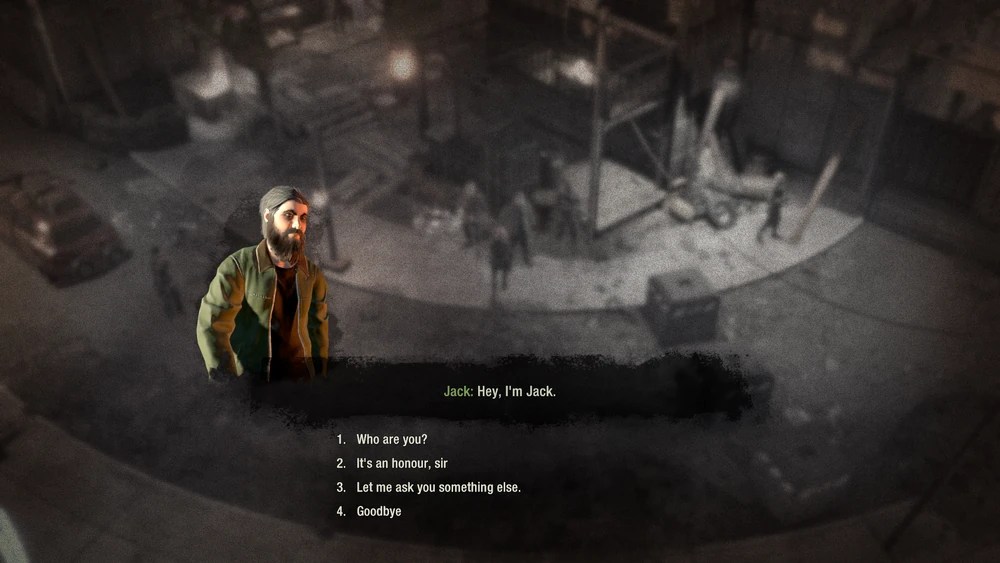
For those not in the know, Jack Davis is the original protagonist of the very first two games in this franchise. He did not return in Dead Zone, but he actually does make a cameo appearance in this game, where he can directly tell the player about his involvement in the first two games.
It isn’t just a funny little cameo to appease older players, though. As somewhat hinted at, Dead Zone was a multiplayer game where basically no semblance of story or signs of this game’s lore appear. As such, Aftermath came out over a decade after this franchise had any serious traction with its lore and overall storyline.
Despite this, Con Artist did a very good job with attention to detail and upholding lore-based continuity. H.E.R.C makes a return in this game, essentially reprising its role as the “evil federal government agency” they were in Union City. As well, frequent brief references to past games in this franchise are made, and the selection of weapons available for use includes a great deal of iconic armaments from Union City and even the first Last Stand to boot.
It was very refreshing, noticing that despite its relatively lull in activity, Con Artist was capable of rebooting the franchise in a faithful, effective manner.
Most games are not completely perfect, even if they are strong overall. This game does have, sadly, one really big talking point going against it that must be addressed.
Bugs
This game has been out for, at the time of writing, roughly four and a half years. It has not seen a major update since 2022, so it’s reasonable to assume the state it’s in is finalized. Despite that, there are some really annoying bugs that can seriously harm gameplay when they do appear.
At times, the player will find a radio, which can ordinarily be used to communicate with Radar and apply Knowledge points that can be very useful. Yet, at some points, the game will simply refuse to work when the player tries to do this, and for no explainable or traceable reason. Radar just doesn’t want to get out of bed and punch in for work, sometimes.
Rarely but possibly, the player can actually end up soft-locked and forced to kill off their character due to fuel-related issues. The player will need to often make several stops along the trip to Hell to refuel their car. And sometimes, inexplicably, fuel does not appear in zones where it is clearly supposed to appear. If the player’s car is empty on fuel and there is no fuel in their vicinity, they will be left unable to proceed, and will have to do something like blow themselves up with a grenade to reset their run with a new character entirely. Personally, this has only happened to me twice, but looking online and interacting with other fans of the game, I should probably count my lucky stars that it only happened to me that minimally. This is very clearly unintended, as the game has areas which are directly intended to have a 100% spawn rate for fuel, and the player will be told as much.
Finally, when finally arriving at the laboratory in Hell, audio begins to act very funnily. If the player kills zombies with a melee weapon on this map, they will sometimes later re-hear the sound of their melee weapon hitting the zombie, only the audio’s volume will be strangely jacked up super high for some reason, leading to a heck of an auditory jump scare.
Personally, I actually played this game for the first time back when it launched. Why then, did it take me almost five years to write about it? Because, at the time of launch, this game’s Platinum trophy was far more cumbersome than it should have been to acquire. Some of the achievements read as if they’re cumulative, and they would later finally become cumulative in 2022. But at launch, players could only earn these achievements if they did them, start to finish, in one single sitting. While theoretically possible, it is understandable if a player doesn’t want to damage their console leaving it on for 10, 20, 30+ hours so they could do the entire game in one sitting. If you didn’t do exactly that, bugs prevented you from earning the Platinum. Fortunately, in the world of today, the Platinum trophy and all achievements work exactly as they claim to work, and as they should. But it took over a calendar year to finally correct this.
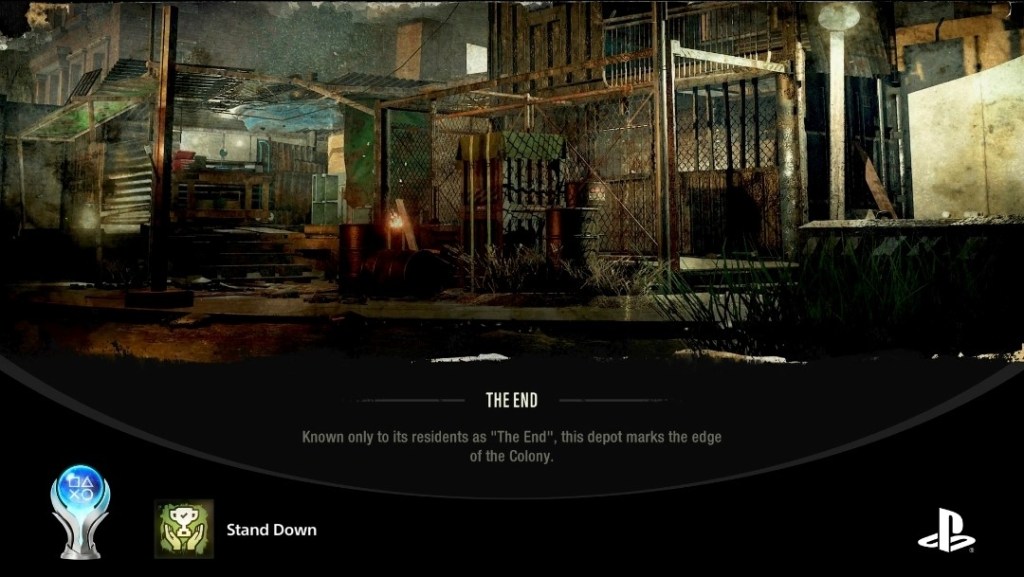
In general, Con Artist is an Indie game studio, and a veteran one at that. On one hand, being Indie does make some degree of flaws in functionality forgivable. On the other, some of these annoying bugs still exist today which does serve to very slightly undermine Con Artists’ diligence at actually releasing a fully finished product.
That’s about it, really.
On the whole, despite how the game can, on rare occasion, act a bit bizarre, this is an overall very strong showing. This is an excellent game for those who need something they can put down immediately, being single player. It’s also a game one could just get lost in for awhile, being very replayable and having a lot of meat on its bones. This game is oozing with personality and positive attributes, so despite the bugs, it would be well and proper to give it a grade of an A. This one is both cheap on digital storefronts and easy to enjoy. Add this one to your backlogs, and you won’t regret it.
 InReview
Leave a comment