

With “Nosferatu” and “Wolf Man” playing in theaters last month, it was truly Halloween in January.
I’ve already reviewed the former; today we’ll focus director Leigh Whannell’s take on the latter.
“Wolf Man” is, at its core, a tragedy. We open in 1995, where hunter Grady Lovell (Sam Jaeger) is out on a hunting trip in remote Oregon with his son, Blake (Zac Chandler), when they encounter a werewolf.


Grady has been aware of this creature for some time, and it’s made him paranoid. They survive the encounter — barely — and several key elements are introduced (like the hunting blind where they hide from the beast) that will play pivotal roles later in the film. However, in order to protect his son, he ends up abusing him, which only pushes him away.
We then jump to present day, where Blake (played by Christopher Abbott as an adult) gets news that his father, who has been missing, has officially been declared dead by the state of Oregon. We also learn just how remote his childhood home is — it’s off the electric grid, miles away from any store or hospital. Anything could have happened to his father.
Still, as his only heir, he has a duty to get his father’s affairs in order, despite the fact that they have been estranged for years. His wife, Charlotte (Julia Garner), reluctantly joins him on the trip, along with their little girl, Ginger (Matilda Firth).
Unfortunately, once there, the same type of monster he encountered when he was a kid attacks them, and he gets bit. And what makes the film unique is that it’s mostly told his point-of-view.
We see how he slowly dissociates with his family, as the werewolf disease alters his brain chemistry. He forgets how to speak English and sees his family as hideous monsters, while his other senses are heightened.
He also gets unnaturally hungry. And it’s unclear how long he will be able to hold onto his humanity.

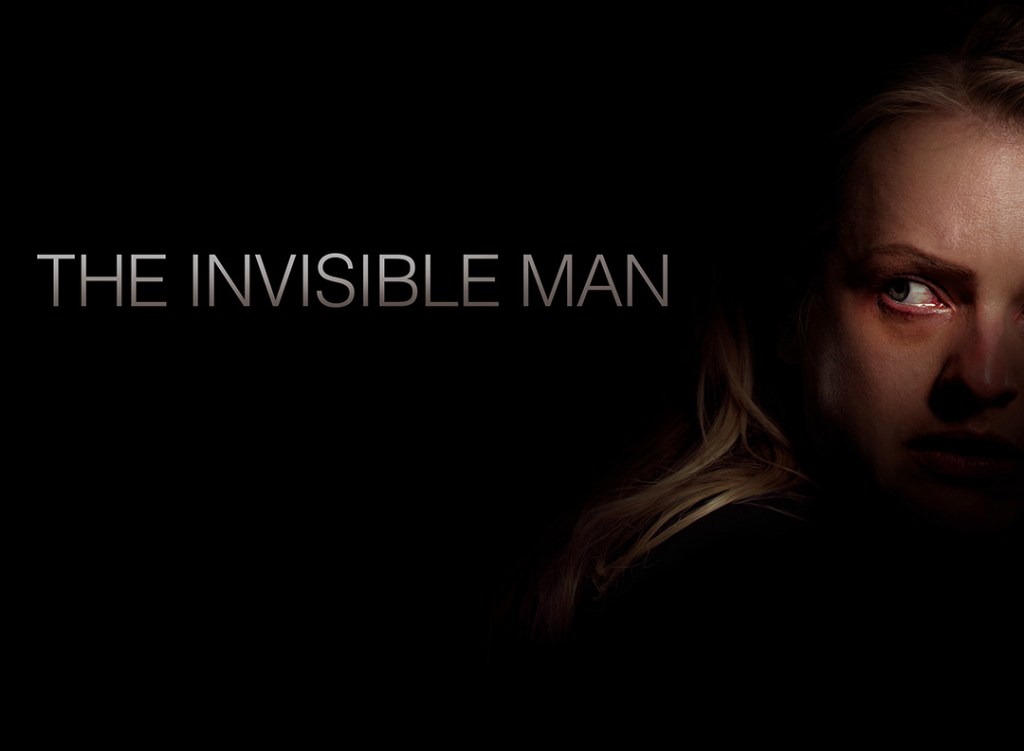
Whannell, who also directed 2020’s “Invisible Man”(one of the Top 10 highest grossing domestic films of that year), makes full use of his settings, which mostly comprise of Blake’s childhood home and the woods outside it. The remote location is almost a character in of itself, choking any hope of salvation via its isolation, where the forest seems to consume all.
Additionally, no object is wasted, be it a CV radio, a shotgun, or even a nightstand; everything that’s introduced is used in unexpected and creative ways.
The script is also excellent. My favorite line comes when Blake laments how much he wants to speak to his father, now that he’s no longer able to. Abbott mostly delivers, as does the rest of the cast, but the script is clearly doing most of the legwork; they manage to competently execute a fantastic blueprint.


This is epitomized by one of the film’s final scenes, when Blake comes to the realization that he cannot overcome the beast within him at the very hunting blind the film started with. Instead this time, he’s the monster.
Whannell leaves it wonderfully ambitious whether or not Blake is forcing his family’s hand to take action against him, or if he has legitimately succumbed to his newfound primal nature.
The film’s other tragic elements are also great, which I won’t spoil. The film has some profound commentary on how we often create our own monsters, especially in regards to Blake’s father, who became one while trying to protect his son, which ultimately kicks off every event in this film. The werewolf disease also serves as a fantastic metaphor for how trauma is passed down through generations.
“Wolf Man” is one of the best takes on this subject I’ve seen. It does not eclipse “Nosferatu” (its cinematography and weak visuals mostly hold it back), but it’s a worthy companion film for anyone looking for a monster mash double feature.
If only both films came out during Halloween!
“Wolf Man” gets a 9/10

 InReview
Leave a comment