
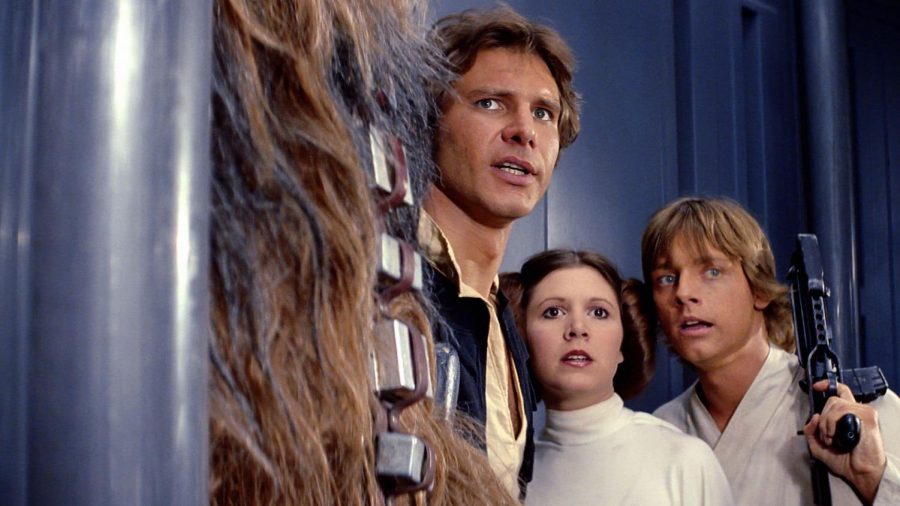
I grew up on “Star Wars” on VHS. No, not George Lucas’ “Special Editions,” which are the only way to stream the first three films legally now.
Still, I hadn’t watched them recently, and much of my most profound memories of them do stem from when I first watched them as a kid. I’m not alone in this notion — those older than me harbor dear, formative memories seeing those original films in theaters multiple times. That first 1977 film, originally titled “Star Wars,” became a cultural phenomenon that has successfully evolved into a multibillion-dollar franchise.
So, I decided to give that first film another watch on my flatscreen at home. Does it hold up?




Charm intact after near 50 years
In 2024, the charm of the original film still shines through, even in HD.
I admit, the effects look the worst they’ve ever been, which is more a testament to how far special effects have come than a criticism of the film itself. Its use of practical effects like miniatures and its clever use of matte painting cutouts for wide shots that show of its world still work and look much better than the aging CGI that invade the frames of its special edition.
But even if, on a modern TV, you can tell that all the film’s stormtrooper armor are just painted pieces of plastic and none of the starships are actually real it doesn’t matter. As “Star Wars” TV veteran George Filoni has pointed out, what makes “Star Wars” work isn’t the things we decorate it with — X-Wings, Star Destroyers, lightsaber fights, etc. — but the strong characters it portrays and its overarching message of family and doing the right thing.

Narrative flaws
From a narrative perspective, the original film leaves a lot to be desired in certain parts, particularly Luke’s reaction to the loss of his aunt and uncle, who raised him. If you’re unfamiliar with the film, Luke starts out as a moisture farmer on a middle-of-nowhere desert planet, where he long for adventure. His uncle, however, serves as a barrier to his ambitions, saying that he needs Luke to work for him another year.
Luke then runs into Obi-Wan Kenobi, a Jedi master in hiding, while looking for R2-D2, a droid his uncle recently purchased, who was previously owned by the Rebel Alliance.
R2 and his sarcastic friend and fellow droid, C-3P0, end up getting Luke’s aunt and uncle killed when Stormtroopers from the Empire come to their home looking for them.
“Star Wars” was a film that was saved by editing, and the scenes following their deaths are one of the few moments where that really shines through. We see some grief from Luke, sure, but we rush through it so that he and Obi-Wan Kenobi can get to the Millennium Falcon in order to get to its first major set piece — the Death Star.
This is an important scene to get right because it fuels Luke’s decision to join the Rebellion and gives him reason to hate the Empire. It also brings his childlike need for adventure to a sobering reality that he frankly doesn’t grapple with, because he doesn’t have time to marinate in his turbulent thoughts.
However, it pails in comparison to the film’s missed opportunity for Princess Leia Organa, its female lead.
Leia sees her entire world get destroyed (literally) by the Death Star — a giant weapon that annihilates planets. Grand Moff Tarkin, who’s in charge of the station, brings the full force of its power down onto her homeworld of Alderaan to not only break her spirit, but to also demonstrate its devastating power.
This should be a moment that breaks Leia to her core — impacting her will to fight. We now know Bail Organa — her adopted father — died in the Death Star attack, taking away the only family she’d known. Yet after her initial cries of shock, it’s never brought up again.

Prequel-esque politics were always there
Fans that claim that politics were never a huge part of “Star Wars” are looking at the Original Trilogy through a rose-colored, revisionist lens. “A New Hope” opens with the Empire seizing even more power for itself, with the dissolution of the Imperial Senate, of which Leia is an influential leader of, though she and her father had secretly been funding the Rebellion.
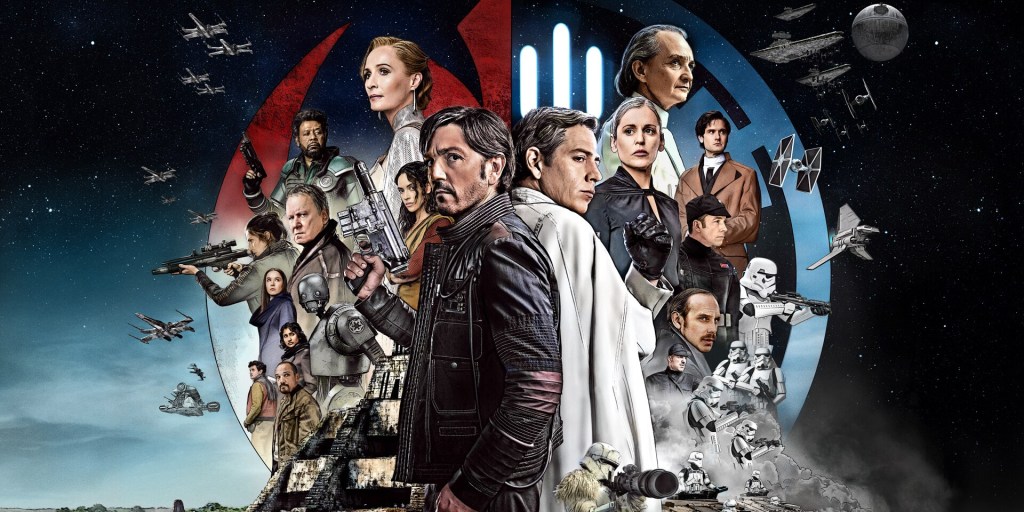
“A New Hope” signals the end of the shadow game we’ve seen developed so well in “Rogue One,” “Andor” and “Obi-Wan Kenobi,” as Leia is outed as a rebel leader and her entire planet pays the price for it. One of the first time we see Tarkin, he is discussing the demise of the Senate and how the Empire is transitioning to regional governors, killing the last foothold of democracy.
Beyond that, “A New Hope” has plenty of convoluted factions at play, such as Jabba’s bounty hunters in Mos Eisley, the criminal underworld we see at the cantina, the Tusken Raiders that roam Tatooine’s wastelands, the Empire and its network of spies and operatives and, of course, the Rebel Alliance, who function like an organized military — though they do let Luke and company join conveniently fast so the final space battle can happen.
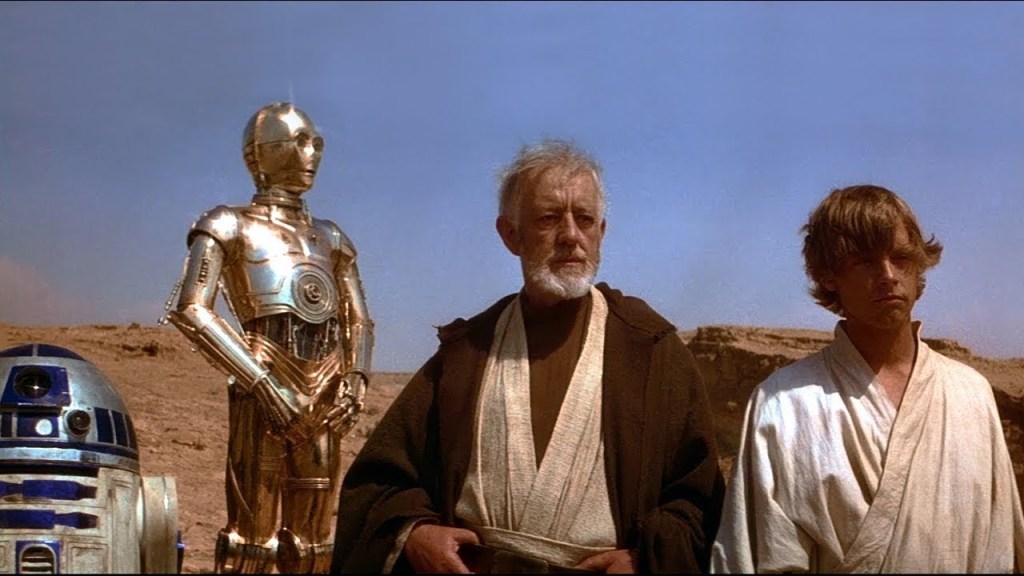
Fans didn’t pay attention to Obi-Wan Kenobi
Since the “Obi-Wan Kenobi” show came out, there have been a lot of bad and frankly incorrect takes on how it rewrites the canon and meaning of “A New Hope” by having him not stay put in the desert for 20 years. Watch the film again — all Obi-Wan does is give off hints that he’s been on recent adventures.
The biggest dead giveaway within the text of “A New Hope” is his familiarity with the Empire’s technology, which did not crop up overnight, as well as how sharp he is in a fight. Thanks to later works, we know that there was a slow transition from the Republic’s Clone Troopers and Clone Wars-era technology to the technology we see the Empire use in “Episode IV.” If he did not leave Tatooine, he would not be able to identify a TIE Fighter in an instant, like we see him do when when he, Luke and company arrive at what remains of Alderaan.
Beyond that, Obi-Wan has key inside knowledge on Tusken Raiders and how to find the best pilots in Mos Eisley. He’s also been largely absent from Luke’s life for years, so much so that Luke doesn’t know where to find him.
Has Obi-Wan been protecting him all this time? Absolutely. But that doesn’t mean he never left the planet in all that time.

It’s still fun
At its core, what makes “Star Wars” so accessible is how fun it is. Borrowing from the works of Akira Kurosawa, “Flash Gordon,” and World War II aerial battles, it blends what was cutting edge production values with thrilling, varied action.
This is not a boring sci-fi adventure with bug-eyed aliens driven by deep, philosophical but nonviolent debates. It’s a simple tale of good vs. evil with stunning visuals and creative shots that still entertain today, even if the plastic in its sets is easier to notice.
The first film still had impressive lore, though I feel like that aspect has overtaken most new projects in the franchise. “Star Wars” is an easy-to-understand movie that makes you feel good. Yes, new projects have to work in tandem with what those before it established, but the fundamentals of good storytelling should never take a back seat.

Star Wars can be many things
Does this mean “Star Wars” can only be good if it emulates “A New Hope” and the Original Trilogy? Absolutely not.
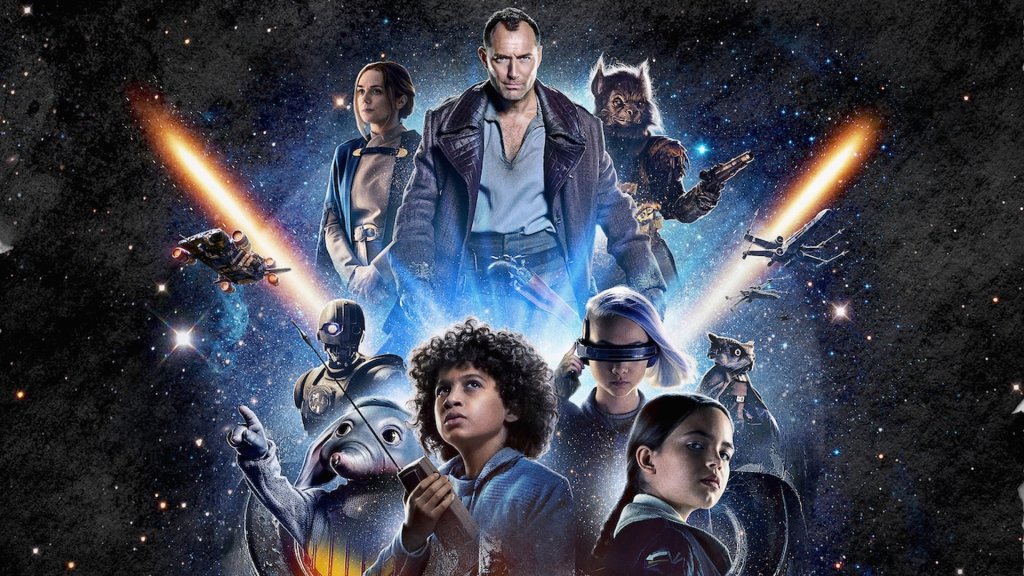
It can and has been many different things; a best selling book series, many popular video game series, and it has also had a handful of really successful televisions shows that add extra dimensions to this universe.
Does “A New Hope” offer lessons for future projects? It does. It’s what made this series successful in the first place, namely because of how accessible it is, the catharsis its action provides, and how efficiently it introduces unforgettable, likable characters.
But it can and has been surpassed by more eloquent works in this franchise — the first of which is its sequel, “The Empire Strikes Back,” which is considered one of the best film sequels of all time by many.

 InReview
Leave a comment