
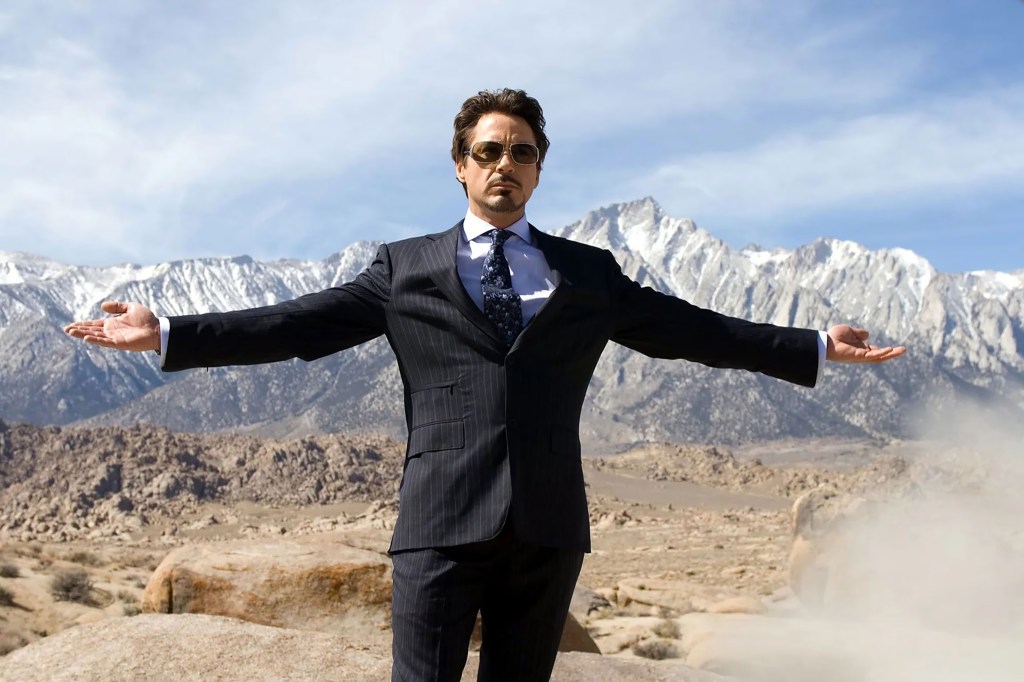
With the wave of hot takes on Marvel’s decision to cast Robert Downey Jr. in future movies — including the next “Avengers” — dying down, what does this actually mean for the company and what should moviegoers take away from this?
The news came last week at Comic Con, as part of a panel with “Avengers” 5 and 6 directors, the Russo brothers, who were revealed to helm the projects about a week prior.
Both represent a hard pivot to what’s familiar for Marvel. It’s no secret that Phase 4 and 5 of the Marvel Cinematic Universe has been hit or miss for the franchise, with some (i.e. “The Marvels”) being huge strikeouts for the cinematic juggernaut.
Downey’s casting, and the new title for “Avengers” 5 (“Avengers: Doomsday”), which essentially erases “Avengers: The Kang Dynasty,” are also clear departures from Jonathan Majors and Kang, who was supposed to succeed Thanos as the MCU’s current big bad. Majors was fired from the role after he was found guilty on two domestic violence charges.
The pivot was so sudden, it’s jarring. It’s also produced waves of scepticism and cautious optimism from fans. On one hand, it can be seen as an uninspired retreat to what’s comfortable, especially if Downey’s Doom turns out to be an alternate version of Tony Stark, whon Downey played for a decade, who’s become evil. On the other, Downey is an extremely talented actor completely capable of immersing himself in a role that has nothing to do with Stark.
My instincts tell me that Marvel is likely to go with the former approach, given its past history in which it’s used Iron Man as a way to introduce characters like Spider-Man, Mysterio and Ulton. Fans also love the character, and Marvel has recently had a lot of success reviving Hugh Jackman as Wolverine in his crossover movie with Ryan Reynolds’ Deadpool despite the character having a perfect sendoff in “Logan.”
As much as I dislike Hollywood’s propensity to flock to anything that’s familiar or has been a hit before, it often works. People know who characters like “Spider-Man,” “Batman” and “Iron Man” are, so you can always count on a portion of the general public to turn out for films based on them, even if they’re duds. “Batman v. Superman” was able to do exactly that, despite being perhaps the least watchable superhero film since “Superman IV: The Quest for Peace.”
If Downey and the Russo brothers deliver like they usually do, “Avengers: Doomsday” will succeed, even if it’s not particularly original. This move particularly reminds me of the pivot back to Russell T. Davies as showrunner and David Tennant as The Doctor in “Doctor Who” — a move I am fully certain the BBC would not have done had Davies’ and Tennant’s predecessors, Chris Chibnall and Jodie Whittaker, produced great ratings. Yet it’s paid off wonderfully.
The MCU has been floundering on the big and small screens, with its last hits being last year’s “Guardians of the Galaxy Vol. 3” in theaters and “Loki” Season 2 on Disney Plus. It’s time to get back to what works.
I can’t help but wonder what the state of movies would be like if the pandemic never happened. We’d certainly have more theaters — but many of Marvel’s Phase 4 and 5 films also might have been smash hits.
The MCU had a lot of its momentum blunted by COVID, as it delayed the release of its films, saw their costs balloon and ultimately got people used to not coming out to the theater every few months in order to stay connected to the global conversations about them. COVID also saw streaming platforms strip away the exclusivity theaters had and made longform TV shows more relevant, especially when people were stuck at home.
Marvel initially had a lot of success during the pandemic, as shows like “WandaVision” and “Loki” convinced people to buy Disney Plus subscriptions. But, like “Star Wars,” it’s just pumping out too much content, too fast; people can’t keep up and the quality, particularly of its shows, has plummeted.
Marvel chief Kevin Feige deserves full confidence in this move. Despite the missteps of Phase 4 and 5, Marvel is still capable of making hits, and what Feige was able to accomplish with the first three phases of the MCU is still unparalleled in cinematic history. In the last four years, the entertainment landscape has shifted dramatically, and it is commendable that the MCU has been able to stay culturally relevant throughout it. Such meteoritic shifts could have been genre killing.
Will Marvel rebound? I still think there’s a good chance they will, but they need to get their budgets under control (not every $200 million film will be profitable) and focus on quality over quantity. I also think $1 billion-earning films, which Marvel saw multiple of before COVID, will be increasingly uncommon, as people get used to being more skeptical of what they’ll go to the theater to see.
I think the more interesting question is: Will superhero films continue to be the dominant genre in Hollywood? Right now, they still serve as an excellent engine to tell a story that’s either serious or not with blockbuster special effects that help get people into seats. It really exploded once filmmakers learned that not every superhero film had to be drab, depressing and unnecessarily full of leather and that audiences will see films that bend genre norms if they’re good.
Take “Deadpool & Wolverine,” which has already grossed over $800 million worldwide. It’s the third installment in a franchise Fox was initially skeptical of because it’s a straight-up comedy series. Instead of viewers either getting confused or disinterested in it, as many executives might have feared, it’s seen as refreshing and unique, though a huge part of that has to do with its top-notch scripts and excellent casting of Reynolds as Deadpool. He fits the character so well, it’s hard to see it played by anyone else.
 InReview
Leave a comment