

On June 21st of this year, the highly anticipated Elden Ring DLC, Shadow of the Erdtree released. It was a follow up offering to the game that took home Game Of The Year honors in 2022. From Software has developed a reputation for amassing some legendary DLC content; would this be another such masterpiece?
In some ways, yes. In a couple of others, not so much. Let’s talk about what the DLC does well, then examine its shortcomings.
(Most) Boss Fights
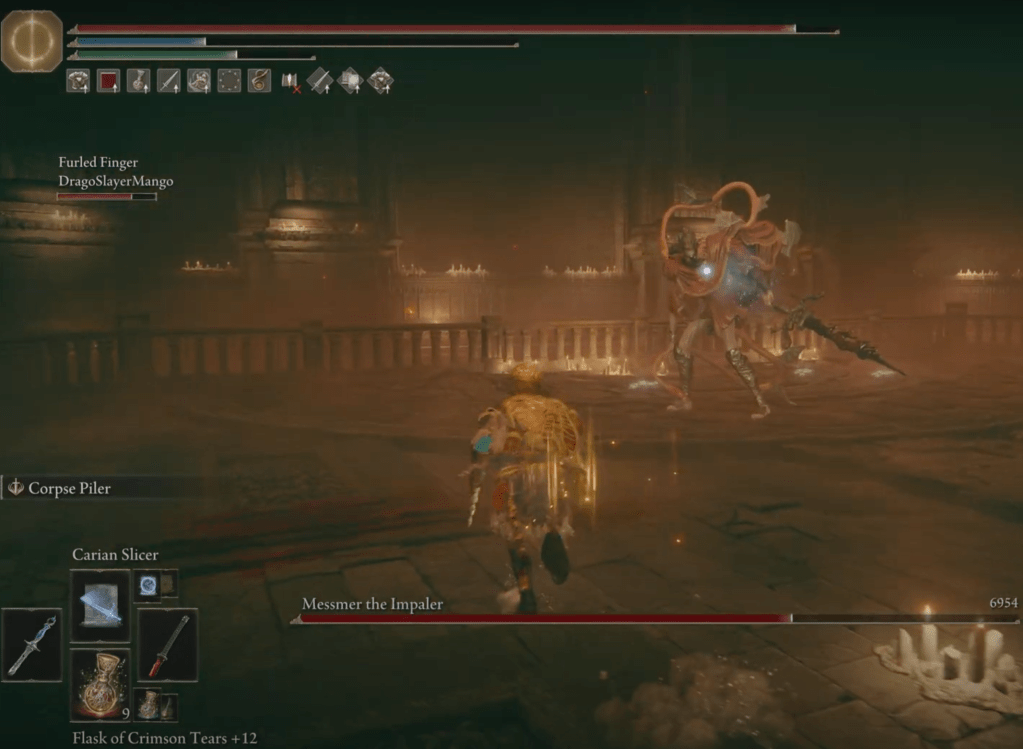
Unsurprisingly, bosses are incredibly well rounded. Many of them, such as Bayle the Dread, Consort Radahn or the iconic Messmer the Impaler, are visually just stunning. Many of them, such as Rellana the Twin Moon Knight or Putrescent Knight are mechanically interesting in addition to being very well presented. Even bosses found in throwaway dungeons, such as the Bloodfiend Chief, were at least interesting to do on a first playthrough, more than can be said about a lot of the base game’s throwaway dungeons.
DLC-specific scaling
One could argue that any challenge the base game could possibly muster can be overcome simply by leveling up a bunch of times. Malenia, Blade of Miquella is quite the daunting foe, until your level 713 character with 200 poise just face tanks all of her moves and conjures some flashy series of buffs into a Greatsword to hack her down in two minutes. From Software realized this and introduced the Shadow Realm Blessing mechanic to prevent players from doing this. Whether level 1 or level 713, the player will be heavily encouraged to the point of being nearly gatekept to collect Scadutree (Sha-due-tree) Fragments and, to a lesser extent, Revered Spirit Ashes. These items directly buff the player in a very small way, and when they are accumulated, these buffs start to make a large difference. Without any Scadutree Fragments, even a maxed out character could find themselves getting two-shot by basic enemies, much less bosses. With the maximum 20 levels of Scadutree Fragmenting, the game similarly turns into a much easier experience. As such, right from the get go, the player is already being incentivized to do a lot of exploring.
New Equipment
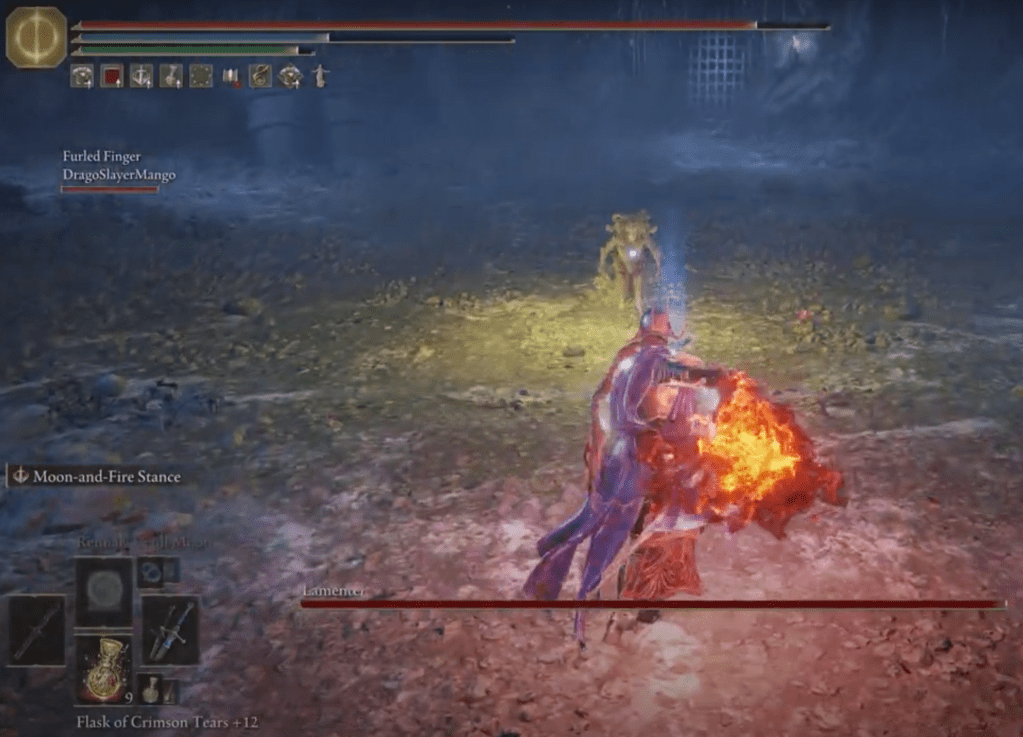
Not only do the DLC’s weapons perform masterfully in combat, but many of them are incredibly fun to wield. My personal favorite would have to be the Rellana’s Twin Blades, a dual-wielded combo of magic and fire greatswords that distinctly resemble the pair wielded by the iconic Pontiff Sulvyahn of Dark Souls 3. Apart from that, there are weapons, armor, spells and Ashes of War originating from this DLC that are extremely cool. Many of them are for Faith or Intelligence-centric builds, but there’s ultimately something for everyone.
Rellana, Twin Moon Knight
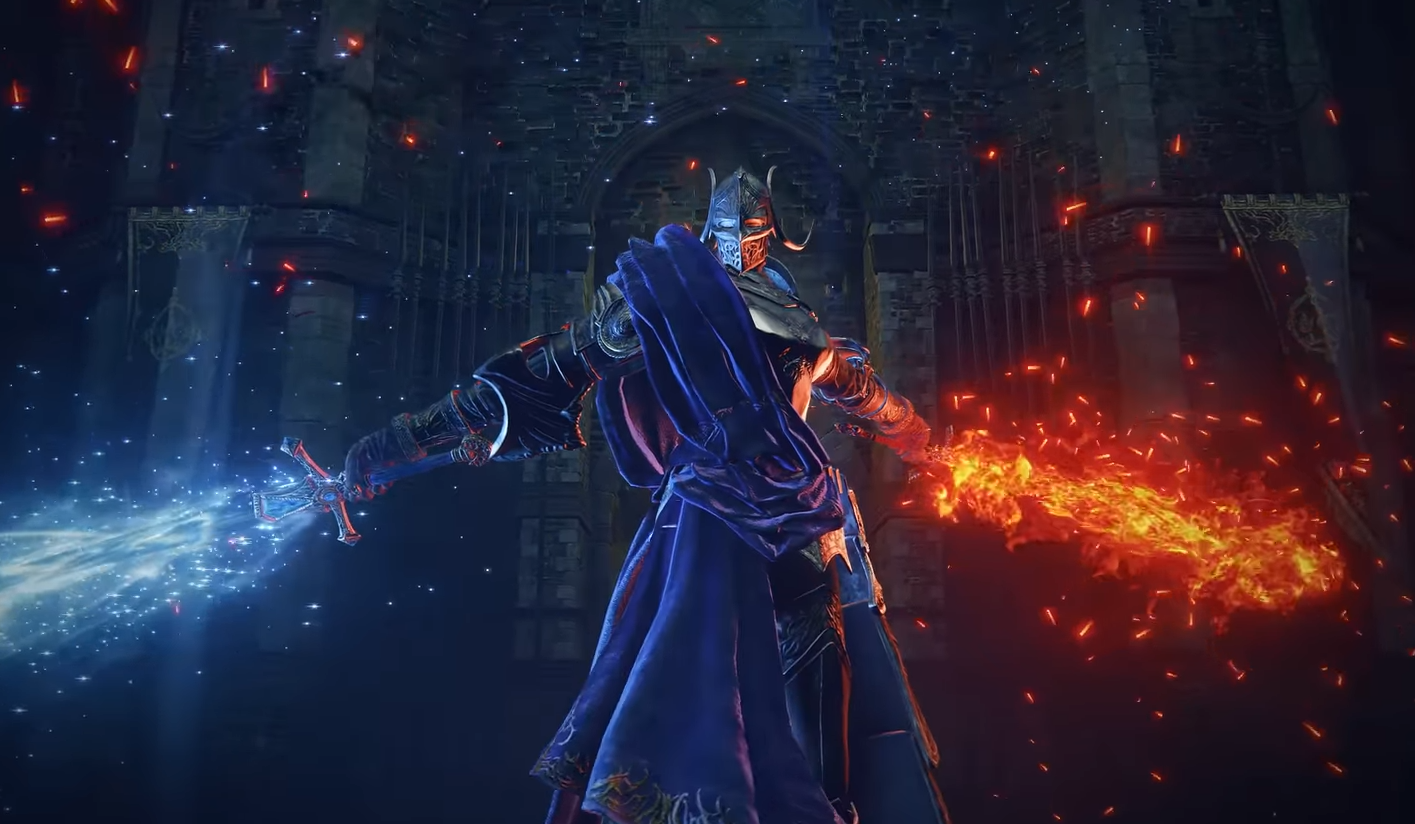
Rellana is found very early in the DLC, to the point where she could easily be the average player’s first boss encounter here. This fight is fast and furious just like most fights in the DLC are, but it seems to have been handled a little more carefully than a lot of other fights, because it never feels unfair or overwhelming at any particular point. Fights such as Consort Radahn or Messmer the Impaler aren’t consistently unfair, but they can put themselves in positions where the player spends even whole minutes doing nothing but dodging or blocking attacks, with no room to get any sort of an opening. The boss room here is also relatively small, favoring close quarters engagements and preventing the fight from dragging on like what can potentially happen fighting Consort Radahn or Romina, Saint of the Bud.
Visually, this fight is pretty cool too, without getting overly grandiose. Rellana’s two blades are really cool to go against when she goes Pontiff Sulyvahn on the player to start her second phase. Moreover, her projectile attacks, particularly her Twin Moon sorcery, are fair to go against, reasonably threatening and visually impressive.
Sadly, while this DLC is definitely not at all bad, there are some shortcomings to discuss. Let’s begin.
Item Drops
In order to reach the DLC in the first place, the player must defeat Mohg, Lord of Blood and Starscourge Radahn. The former is an end game boss, meaning the average player will need to be pretty well equipped with a rock solid build in order to prevail. Knowing this, why did From Software think littering the DLC with a bunch of low level upgrade materials, useless cookbooks and other random utilities was a good idea? This doesn’t really detract from the experience all that much, but it does make it difficult to get excited seeing a slain enemy drop an item.
Romina, Saint of the Bud
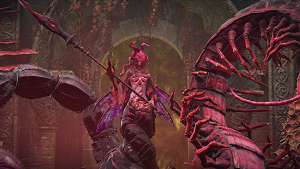
This is probably the only fight in the DLC that plainly and simply sucks, especially if played alongside a friend or other cooperator. It isn’t actually all too hard, but the way in which the player is meant to optimally respond to many of Romina’s attacks is to simply run away. She closes the gap with AoE and multi hit attacks that make close quarters engagements typically ill-advised. This makes openings more tedious to find, but it’s even worse for cooperators, primarily those with melee builds. Trying to run down this boss when she is aggroed onto another player is a potentially minute long marathon, between her massive boss room, juiced up mobility and tendency to use moves that force players away from her.
Radahn, Consort of Miquella
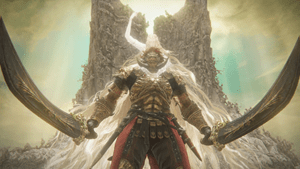
It’s really just the second phase of this fight that goes a little overboard, mechanically. If anything, one could argue that the first phase is too simple, probably in preparation for a volatile second phase. Radahn shares many of the same problems for a cooperator as Romina; it is a trek just to get in range to actually interact with him, if the other player ever takes aggro. At least he can be more comfortably and adequately fought in close quarters.
Empty World
/cdn.vox-cdn.com/uploads/chorus_image/image/73420353/furnace_golem_elden_ring.0.png)
In between dungeons and boss encounters, the actual ‘open world’ Elden Ring has hung its hat on since Day 1 is a bit meager in the DLC. In the base game, this criticism can also be made, but to a lesser extent; things actually tend to happen outside of various checkpoints, NPCs can appear and questlines can begin, particularly in Limgrave. Here, however, the only thing of substance roaming the overworld that isn’t right next to a Site of Grace is the Furnace Golem. The Furnace Golem is admittedly fairly cool, but it’s otherwise just seemingly miles traipsing through translucent tombstones and traveling bleak, dark dirt roads. It would’ve been better for it to take slightly more of a linear approach to progression, and it would’ve simplified collecting the ever important Scadutree Fragments significantly as well.
Narrative Delivery
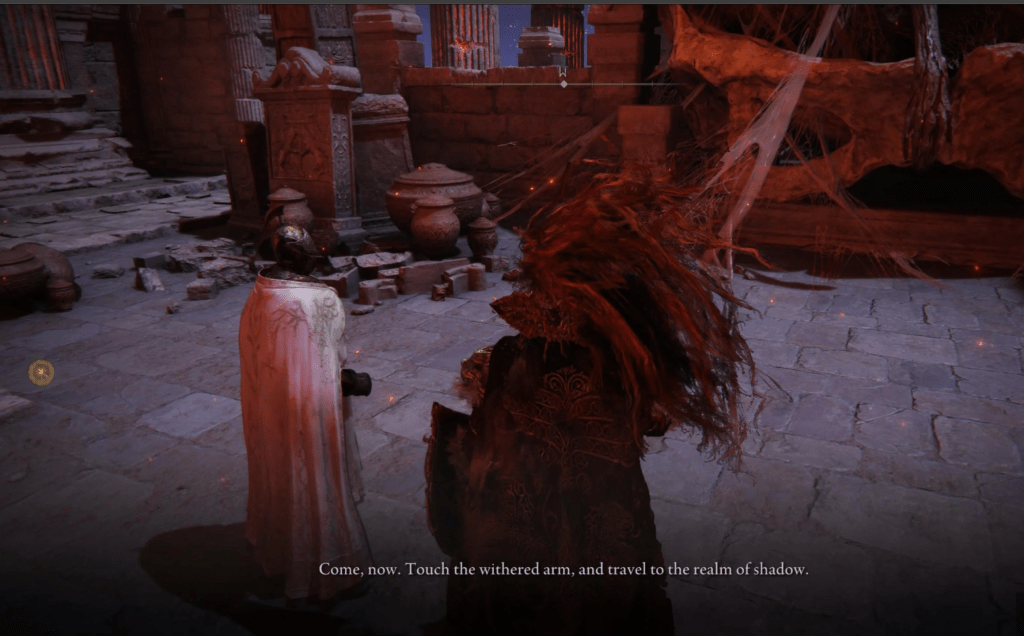
Obviously, From Software wanted the player to be surprised by the plot twist of fighting Radahn once again in the DLC. However, they teetered the line between prematurely spoiling it and making it obscure in a less than ideal way. Important NPCs massively hint towards the presence of Radahn within the DLC. One of the armor pieces attributed to Radahn from the base game saw a minor text description update that directly alludes to his role in the DLC. It was just a little too close to From Software showing their hand for comfort. In Dark Souls 3, we know of the existence of Sister Friede in the world of Ariandel off of just what’s available in the base game, and it’s relatively reasonable going in to expect to eventually meet and possibly fight her. However, she is revealed in a far better way, as she’s first presented as a docile NPC who even gives the player a free goodie when meeting them, which can greatly throw expectations off and make the grand reveal even better. An approach like that, with alterations to accommodate for Radahn’s character dynamic, would have been better.
The Narrative Itself
DLCs from past From Software games offer closure on a pretty satisfying level. In Bloodborne’s The Old Hunters, the player finishes the DLC knowing that the scourge of beasts is at an end thanks to their own actions, with all parties responsible having been slain. In Dark Souls 1, the entirety of Oolacile is saved when the top dog of the entire Abyss in Manus is killed. Of course, in Dark Souls 3, the literal Dark Soul of Man itself is fought over at the end of the world and eventually claimed by the player. There are no leftover questions unanswered.
Here, however, there are plenty of leftover questions the DLC doesn’t offer much closure to. Did Radahn willingly or forcefully decide to serve Miquella? Who is the actual Lord of Frenzied Flame? Does Malenia, Goddess of Rot, actually have some sort of agency, or did Miquella ‘charm’ her too? Many, many more very important questions remain and, barring a future DLC, it causes Shadow of the Erdtree’s narrative to fall a bit flat.
Finally, Remembrance Bosses in the DLC are handled quite poorly, narratively speaking. In the base game, every Demigod and most Remembrance Bosses in general have a metric ton of build up that makes the fights tense and satisfying to prevail in. Here, random names are given to the player with no narrative build up whatsoever. Defeating them and then receiving a Remembrance reward prompts the player to think “wait, that was a Remembrance fight?” instead of actually feeling pleased over their victory. The only exception to this, of course, is Promised Consort Radahn.
All in all, the DLC is a good or even great experience. However, coming from lofty standards placed upon From Software, it’s really just alright in the context of what they’ve done in the past. This doesn’t come close to the greatness that was Dark Souls 3’s Ringed City. It’s well short of Bloodborne’s amazing DLC and it falls a bit short of Dark Souls 2’s offerings, as well as not really matching up to the iconic Artorias of the Abyss we got in Dark Souls 1 either. I’d give Shadow of the Erdtree a solid B for a grade. Worth playing over and over again all the same, just temper your expectations a bit.

 InReview
Leave a comment