

Having covered the Phoenix Wright Trilogy and the lone Apollo Justice game, today’s piece moves ahead a little bit to discuss the next piece within the titular trilogy. This game shifts the focus from Apollo Justice back to the main man himself, Phoenix Wright and his law agency.
Unlike how the Phoenix Wright Trilogy incorporated three games which directly played off of one another, Phoenix Wright: Dual Destinies served as more of a soft reboot following up the Apollo Justice video game. As such, it isn’t much in the manner of a sequel, though it does reference events from past games a good fair bit.
How did this soft reboot turn out? Let’s discuss pros and cons, starting with what went well.
The Overarching Narrative

Ace Attorney games have been at their best when cases tend to macro-game or, play into a longer term narrative. That is exactly what this game offers, with quite a unique twist. Cases in this game are not in chronological order, though a few of them in particular directly connect to one another in the interest of creating an overarching narrative. The main, true villain of the whole entire game is revealed at the very end of the last case- we will discuss this later, but it was the culmination of a game that offered hints to the player along the way, while keeping just enough wool over their eyes to create a fairly thrilling surprise.
Athena Cykes

Each game in the series brings forth at least one major character, and one of this game’s new main characters is Athena Cykes- an eighteen year old attorney fresh out of law school who latches on with the Wright Anything Agency. The player plays as Athena during one case, and on the others, she plays the role of assistant- it’s in this capacity where she shines the most with her new gimmick which will be discussed shortly.
Athena does have some rough edges to her character design, but on the whole, she offers quite a lot to the franchise. Unlike Apollo Justice, Athena receives a great deal of general characterization and background. Athena’s relationship with one of her friends receives a great deal of backstory, and she is just a lot more vibrant and generally interesting than Apollo was.
Like Apollo, Athena brings forth an interactive gimmick that spices up trials on occasion. And this one is a lot better than Apollo’s, as it asks the player to analyze statements in testimony for emotions- the state someone was in when they said something in particular. The objective is to find an emotion that doesn’t make sense, or changes in an unexpected way- something such as feeling happy when directly witnessing a murder might be something the player has to call out, for example. This isn’t quite on the same scale as Phoenix Wright’s Psyche-Locks, but it’s a whole lot better than Apollo’s magical bracelet. It can also see sparse usage outside of the courtroom, and the player is never penalized for getting anything wrong, so there isn’t any real sense of annoyance when getting a particular prompt wrong.
Turnabout Academy

Turnabout Countdown, The Cosmic Turnabout and Turnabout for Tomorrow are great cases, and this is not meant to throw shade at them. But they’re only truly ‘great’ because they directly connect key plot elements to one another, and as such are in sequence with the grander story of the game; had they been standalone cases, it’s possible if not probable that they would not have been as well received.
Turnabout Academy is a standalone case. You could even label it ‘filler’ as it really has nothing to do at all with the overarching plot of the game. However, it is a really great case, probably this game’s best overall. It has some really out-of-left field plot twists, memorable side characters and a perspective change, as the player plays as the aforementioned Athena Cykes for the first time here. Figuring out the true culprit’s identity is a lot of fun as well, and the case does a really good job making it tricky to figure out.
Last but not least- this case features a cameo of the beloved Klavier Gavin of Apollo Justice: Ace Attorney. And this isn’t just a silly little Easter Egg, as Gavin has a significant role to this case’s plot and is directly connected to the episode as a whole, including some of the side characters. It’s a shame he couldn’t be the case’s prosecutor…
Ordinarily, this is the point in time in which I’m meant to transition to the things this game does not do so well. However, before that happens, there are two subjects I am directly on the fence labelling good or bad, and one of them in particular is very important…
Side characters

This game is hit-or-miss to the extreme when talking about side characters. As previously mentioned, Turnabout Academy offers some really memorable ones. Yuri Cosmos in The Cosmic Turnabout is hilarious. On the other hand, the Monstrous Turnabout has quite possibly the most insufferable, unlikeable side characters out of any case seen under the Ace Attorney franchise. Turnabout Reclaimed isn’t too much better. As seen with Turnabout Academy (and quite frankly, most of the Phoenix Wright Trilogy) having good or even great side characters can really elevate a case, just as having boring, stuffy forgettable ones can hurt- both extremes arguably outweigh the need to even have a cohesive plot in the first place. Nobody complains about how bare and dry The First Turnabout’s plot is- this isn’t the greatest case ever, but it has a couple of really funny characters that make the case memorable.
Damian Tenma is probably one of the worst characters I have ever seen in a video game, and it would’ve been better for everyone if Apollo dropped his case and just let him get hauled away to prison. Then again, the true villain for this case was hardly any better. Perhaps they should be cellmates, as they both definitely belong in Video Game Jail.
On the other hand, the triangle of Robin Newman, Hugh O’Connor and Juniper Woods of Turnabout Academy was quite wild, to say the least. Each of the three has a huge skeleton in their closet, and the grand reveal of said skeleton was bone chilling. Professor Aristotle Means ends up playing a very, very minor part in the game’s overarching plot and was a very entertaining character on the whole. Turnabout Academy wouldn’t have been 1/3rd of the case it was without its wonderful cast of characters.
Prosecutor Blackquill

As a disclaimer, I acknowedge that Blackquill isn’t necessarily a bad character. If anything, he has a really satisfying closure in the game’s final base case that brings his character full circle in a satisfying way. He ends up being much more than the sum of his parts in the end.
Before Turnabout for Tomorrow, at least for me, Simon Blackquill was perhaps the biggest drain to my personal enjoyment of this video game and, if you intend to take this game even slightly seriously and aren’t of an extremely particular taste, Blackquill will likely impact your experience similarly. He is essentially like if you took Franziska von Karma, made her male, then put her through an emo/goth teenage phase of some kind. He is so unbearably cringey in every single way.
The concept of a prosecutor who is simultaneously a convict isn’t a concept that’s dead from moment one. If anything, it has the potential to be very interesting. Indeed, Blackquill’s relationship with Detective Bobby Fulbright was explored at a very bare, surface level, and exploring it more would have helped offer some breadth to Blackquill’s character. There’s also something rather amusing about a convict threatening someone else with jail time, and having the experience to remark on how awful that could be. Instead, Capcom chose to focus on making Blackquill as awkward and cumbersome as humanly possible.
Dual Destinies does plenty of things right, but it also missed on a few details. Let’s talk about some of the things it falls short on.
Investigations

Older Phoenix Wright games have received criticism over how dull investigation scenes could get. After all, they’re really just elongated fetch quests. Phoenix Wright: Justice For All began to make strides towards correcting this, offering Psyche-Locks as something else the player could do to make the experience less monotonous. JFA was the second game in the Ace Attorney franchise that launched almost ten years before Dual Destinies, and yet, things regressed harshly in this game. Psyche-Locks do make a return, late in the game, but they’re used in such a lazy, lackadaisical way that it’s difficult to appreciate. For 90% of the game, Investigations are just fetch quests that get to be very boring before terribly long.
The Monstrous Turnabout
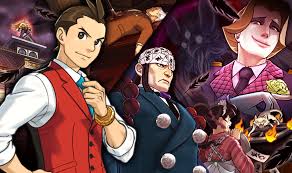
Simply put, this case sucks. It’s an unentertaining premise with terrible side characters that lacks any sort of intrigue whatsoever. Worse yet, like Turnabout Academy, it is a filler case with no relevance to the game’s overarching plot. Of course, we’ve already discussed what allowed Academy to more than make up for this, but Monstrous Turnabout doesn’t hit the mark.
Cases in the past have gotten away with making the true villain easy to predict. But in this one, the true culprit is pretty easy to ascertain after the first investigation – **and then we have two more trials and another investigation sequence after this**. As previously mentioned, Apollo’s client in Damian Tenma was arguably Ace Attorney’s worst client yet, and that’s saying something. He has a plot twist involved with his character, but the twist is shirked over and executed poorly.
Simply put, this case had no redeemable value whatsoever. It is arguably the worst, and inarguably the most boring case seen under Ace Attorney. Turnabout Big Top from Justice For All was a giant mess, but at least it never felt outright boring as much as it did downright annoying.
And that’s about it.
As a standalone game, Phoenix Wright: Dual Destinies is a fine but flawed offering. It is probably overall the worst to-date entry into the Phoenix Wright franchise yet, though this is more of a reflection of how great the previous four games have been than it is berating this game. On that note, it’s time to render a verdict. This InReview court finds Phoenix Wright: Dual Destinies…
GUILTY
…of being a solid entry into the franchise, garnering a B- mark.
 InReview
Leave a comment