
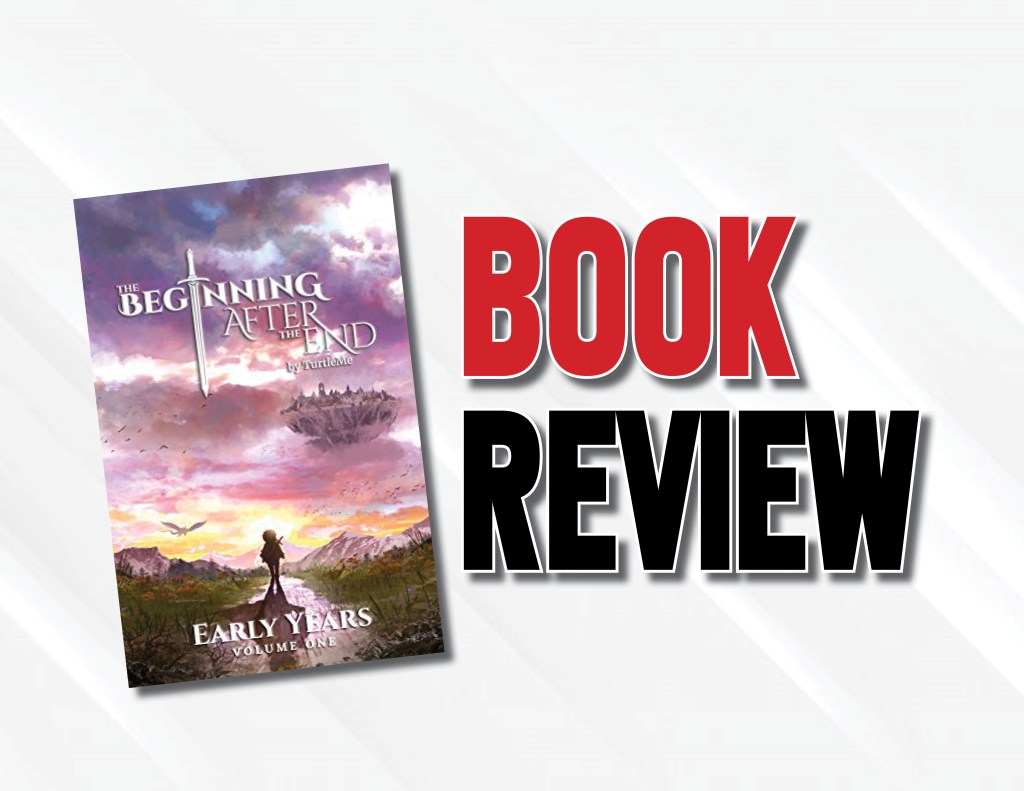
I must begin this review on a personal note, which is something of a change of pace from my other reviews thus far — not that this particular series is markedly different from others that I have reviewed. Rather, the connection this series has to popular adjacent literary trends begs an introduction to apply context.
The aforementioned trends can be defined in one word: isekai.
A subgenre of fantasy, isekai, meaning “another world” in Japanese, involves a protagonist who, through either magic, science, or reincarnation, is brought to a fantasy world and is usually given some extraordinary ability or, in some cases, a flaw that ends up being exploited to a tremendous advantage. Sometimes the advantage is provided from the start, and in other cases, it is cultivated to an extraordinary level.
This particular subgenre has grown in popularity over the years and has now become so popular in both the East and West that it has flooded the Japanese literary market with stories that have become increasingly outlandish. This narrative arms race has transformed isekai into an unpredictable subgenre, where the quality of the story a reader will find varies wildly, from epic masterpieces to those that make you question both the talent and sanity of the author.
The Beginning After the End, though perhaps not quite a masterpiece, is nevertheless a work of note, born out of the surge of the popularity of isekai tales in the West. The series’ creator, Tae Ha Lee, a Korean-born American writing under the pen name of TurtleMe, penned this magical series, which has gained a sizeable following since its first volume was released in 2016. Since then, it has been released as both a novel series and online comic on the tapas.io website.
Perhaps the reason for the story’s popularity lies in its “back-to-basics” approach to isekai, taking simpler and more direct variation of the basic tropes of the subgenre, and building up from it. In fact, it shares strong similarities with series of Japanese origin (and personal favorite), called Mushoku Tensei. But where the protagonist of that series was a degenerate nobody, too afraid to leave his own bedroom before meeting his tragic end and subsequent rebirth in a world of magic, the focal character of TurtleMe’s saga was a king.
King Grey, the most powerful warrior of his world (Either a different “Earth” or some futuristic dystopia of our own world), upon dying in his sleep by mysterious means, finds himself rushing towards the proverbial “light at the end of the tunnel,” then literally being born as a helpless infant, but with all the memories and experiences of his prior life intact.
Given the name of Arthur Leywin by his new parents, the former king-turned-newborn proceeds to navigate through his new life, ultimately learning of his new world while hiding his true knowledge from his family. But after a breakthrough in learning how the magic of this world works causes Arthur to manifest his powers at an extraordinarily early age, the true adventure begins, which separates Arthur from his family; sees him befriend Sylvia, a fierce-looking creature who gives her life to save his and entrusts a dragon’s egg in his care; and has him rescue Tessia, an elf princess using his unusual mastery of magic to help her find a way home. There, her grandfather, intrigued by his magical prowess, furthers his training before he is reunited with his family.
This is only the first book of an epic tale that, at the point of this review, spans ten books, each presenting new chapters and challenges in Arthur’s life. He has his dragon “daughter” Sylvie, by his side, with her true draconic nature hidden from others during his academy days. There, he is reunited with Tessia, and later, becomes invaluable to the defense of his continent in a war against members of powerful races the peoples of his land once worshipped as gods.
The Beginning After the End is about growth, both in maturity and in power, and the burden of responsibilities that this growth places upon Arthur as he becomes a man. Complicating matters further, ghosts from his past life begin to manifest in this world in the most unwelcome ways — as if the survival of his people against godlike beings wasn’t a strain enough. Arthur must become the hero his world needs in a tale that spans years of challenge, trial, and conflict.
Believe it or not, as isekai goes, this is as straightforward as it gets. Nevertheless, it presents the reader with a compelling tale.
Fault-wise, perhaps the only element that may detract from a reader’s enjoyment is the series’ massive cast of characters who come and go. It can become somewhat difficult to keep track of them all as time passes in-story and Arthur endures greetings and partings both temporary and permanent. Otherwise, TurtleMe’s style of writing is crisp, clear, and relatively fast-paced, making each tale an enjoyable delight to read, building the complex world at an easy-to-keep-up-with pace. Additionally, the system of magic is a fuel that drives the reader’s experience in this world through Arthur’s eyes as he continues learning and growing in power under the tutelage of elves, adventurers, powerful academy teachers and beyond.
In a flooded market, it is refreshing to find such a tale that sticks to basics, yet still manages to weave a riveting adventure with a protagonist thrust into a life radically different from the one he left behind, and into an adventure beyond his wildest dreams.
The Beginning After the End appears to be made for the jaded isekai enthusiast for whom the more outlandish tales in the subgenre have lost their luster and longs for something simple, yet with an adventure that grows into something truly bombastic in every triumph and tragedy. In this series, TurtleMe has done just that.
And the best part is, the adventure is still not yet over.
 InReview
Leave a comment