

Ronin revenge stories can be heartpumpingly compelling, especially if it gets the villain right. But they can also suffer from having an unlikeable, bristly protagonist with a chip on their shoulder who is inherently unrelatable.
“Blue Eye Samurai” is well aware of this trope, though it does not subvert it. We follow Mizu (Maya Erskine), a blue-eyed samurai in feudal Japan during its Edo era, who has been persecuted all her life due to her “unclean” lineage (her father is a foreigner from Europe that abandoned her mother).
Mizu is a self-taught samurai, despite being a woman. She developed her own unique fighting style after being a swordsmith’s apprentice for many years, during which time she observed many fighting styles. The process of swordmaking is an intimate, skilled art in which the sword must fit the personality and fighting style of its owner, and Master Eiji (Cary-Hiroyuki Tagawa), Mizu’s “swordfather” and surrogate father, is a great teacher who is patient and understanding.
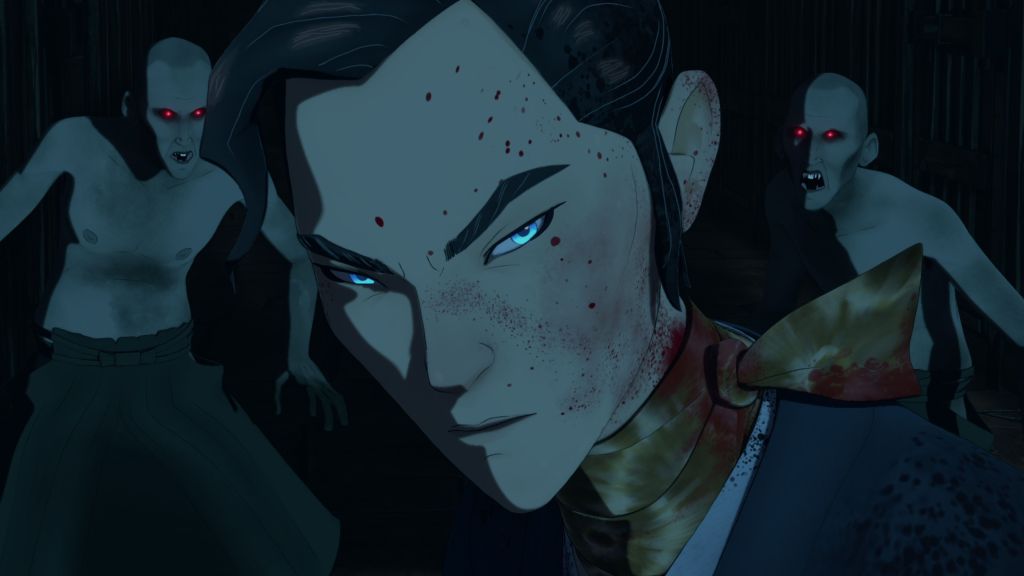
Mizu’s alleged father, Abijah Fowler (Kenneth Branagh), is a prominent weapons smuggler involved in the politics of Japan, and she blames him for a raid that apparently took her mother’s life. That, combined with her outlook that the non-Japanese blood from her father makes her an impure devil, makes her hate Fowler and vow to make it her life’s mission to kill him — hence her decision to masquerade as a man in order to become a samurai.
It’s important to know that she doesn’t know for sure if Fowler is her father — there were only a handful of foreign men in Japan at the time of her conception — but given that her small pool of possible fathers all knew each other, he’s a good place to start.
Mizu’s obsession with revenge makes her inherently cold and antisocial, though the show balances this by surrounding her with interesting and likeable characters whom she learns to tolerate. Her first companion on her journey is Ringo (Masi Oka), a man born without hands who idolizes Mizu after she defeats a group of violent customers at his father’s noodle shop. Ringo is always optimistic and wants to learn how to be a samurai despite his handicap. He becomes an invaluable ally who makes sure that Mizu is fed and receives the proper medical treatment she needs and ultimately has a great message — that there are more than one ways to be great.

Mizu also creates a rival in Taigen (Darren Barnet), an arrogant young swordsman who is trying to marry a nobleman’s daughter named Akemi (Brenda Song). Taigen is the son of a poor fisherman who never lost a fight until he met Mizu, and as such feels like he needs to kill her in order to restore his honor and to convince Akemi’s father to allow him to marry her.
Akemi also serves as a major character, with her arc revolving around her learning to embrace her role as a woman of high status in a male-dominated society. She learns how to manipulate her father and later the royalty of Japan to her advantage.
Fowler is a dastardly villain with almost no remorse, though he is given a horrific backstory in which he had to resort to cannibalism to stave off hunger when he was younger. He sees people — even his own children — as objects to be thrown away or disposed of as he pleases, with his only goal being to use his advanced weaponry to enrich himself by any means necessary.
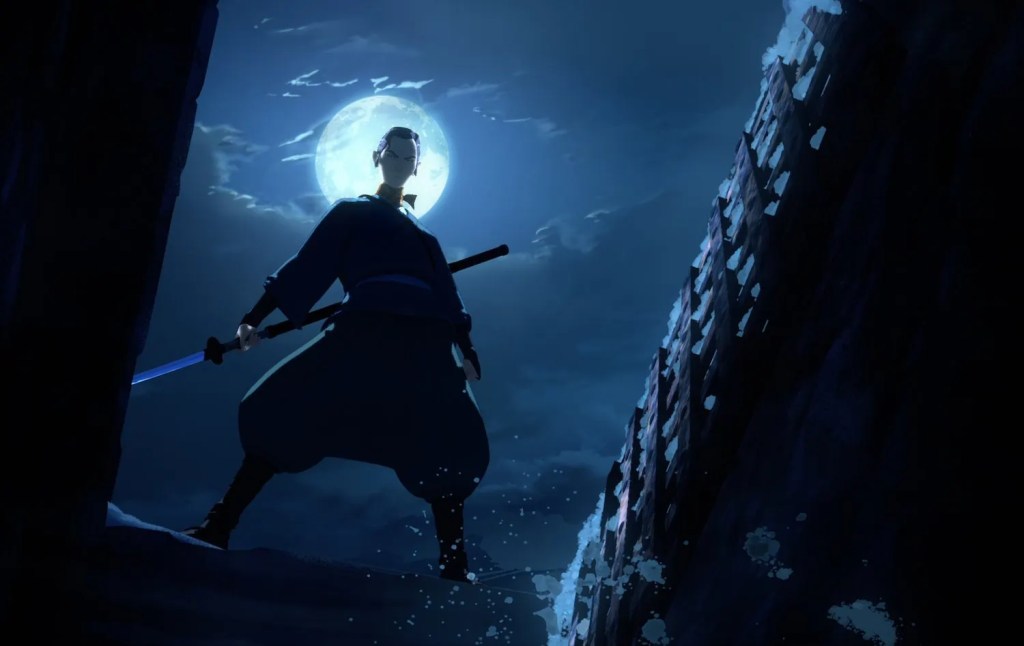
Fowler is paired well with Heiji Shindo (Randall Park), a Japanese nobleman who serves as the middle man between Fowler and the Shogun, who arranged for Fowler to operate in the country in secret in exchange for his business. Shindo is a cunning businessman who thinks in a transactional sense, who attempts to buy off Mizu after she proves too capable for hired assassins to dispose of. He hates Fowler, but like him, he has an extremely compromised moral code and is willing to commit atrocities if it benefits him.
The show is almost instantly engaging, with its well-choreographed fights and strong direction making it hard to take a break from, which my late nights watching the show can attest to. Mizu’s goal of killing Fowler is her primary motivator, but her relationships with Ringo, Taigen and Akemi are the most interesting parts of the show; she finds a genuine friend in Ringo, a rivalry that almost blossoms into friendship with Taigen, and a peer in Akemi.
Mizu is an example of an overpowered protagonist, but she does not break the audience’s suspension of disbelief mostly because she takes a hefty amount of damage; she spends hefty chunks of a few episodes being too injured to get into a substantial fight.
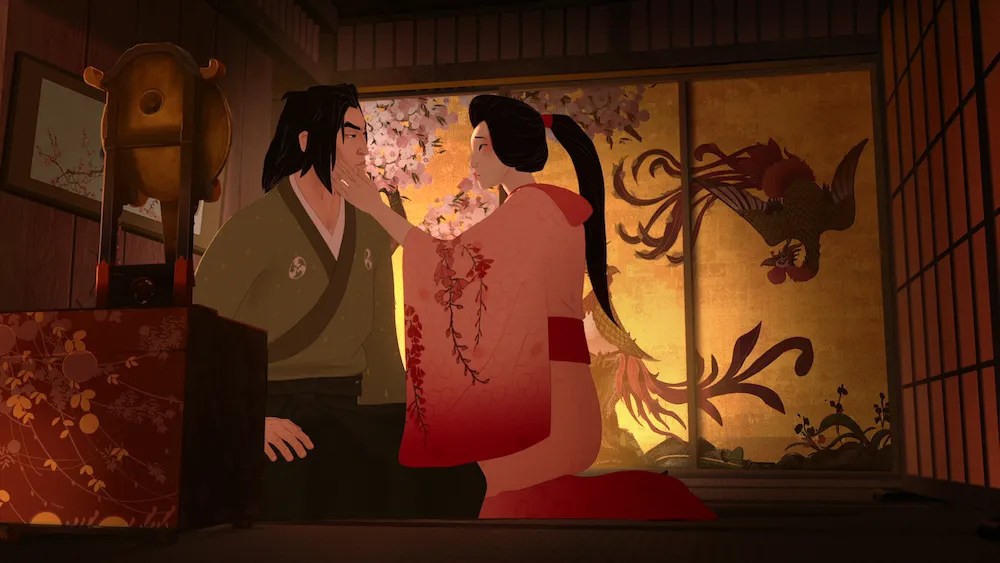
Mizu also develops a lot as a character, as she is given a complex backstory that fleshes out her relationship with her mother and a past husband that gives depth to why she is so bitter and afraid of companionship of any kind.
The show’s animation style works well enough, but isn’t anything special; its cell shaded 3D animation is awkward at times and visually stunning at others. It contently teeters between being inspiring and looking cheap.
The weakest part of the show is its gratuitous nudity and sexual content. If you have teenagers that want to watch this show, be aware that it includes full, uncensored genitals and sex acts. I’m not against nudity or sexual content in TV shows, but I feel like it added nothing to the show and only served to destabilize its focus, as well as bar what is an otherwise excellently executed story from a teenage audience whom I think this show would resonate with.
“Blue Eye Samurai” Season 1 is a tightly crafted tale with some imperfections that holds it back from being great. But its strong characters and excellent character development, well-executed fights filled with stakes and overall messaging of finding your way and learning to grow within as a person make this a very unique and fulfilling watch.
“Blue Eye Samurai” Season 1 gets an 8.5/10



 InReview
Leave a comment