

Atlus has released numerous masterpieces over the years. Their Persona and Shin Megami Tensei mainline series speak for themselves. But of course, Atlus employs human beings who are susceptible to making mistakes. Releasing banger after absolute banger, it was only a matter of time until Atlus tried something that just doesn’t work.
That “something” is the renaissance of a franchise that hadn’t seen an entry since its inception in 1997. Soul Hackers 2 released in 2021, around the time Shin Megami Tensei 3 was remastered. Quite frankly, nobody was asking for a re-entry into a franchise Atlus seemed to forget about from another century, but given the company’s reputation, initial reactions when the game was announced were predictably mostly quite receptive from the broader fanbase.
How did it go? Not very well, not one bit. Let’s have a look at what the game did right and what the game didn’t do so well, starting with what the game got right.
Voice Acting
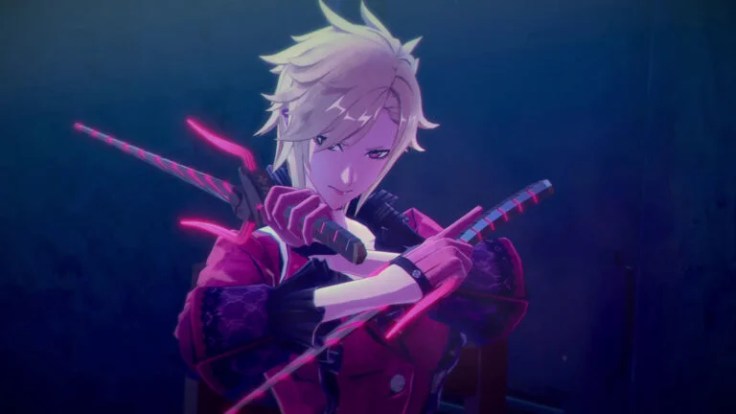
Really, everyone behind a mic did a pretty good job in this one. Standout performances were heard by Edward Bosco (Iron Mask), the familiar face of Erica Lindbeck (Milady) who has had a presence in the Persona series and, of course, the main character Ringo voiced by Megan Harvey. In general, though, voice lines were consistently read with proper emphasis or emotion depending on the context. The script itself was bland and lifeless sadly, but at least it wasn’t a total wash.
SMT-esque gameplay

Combat in this game is passable to even quite decent. Games under the Shin Megami Tensei umbrella generally try to stand out from others with unique combat mechanics, and Soul Hackers 2 is no exception. Here, the main unique gimmick this game offers in combat stems from within the Sabbath system. Sabbaths, like other SMT mechanics, are designed to reward the player for hitting enemies with attacks they are specifically weak to. Unlike other mechanics, Sabbaths do not give the possibility of one unit getting to use multiple actions per turn, instead keeping a tally of how many times the player hit enemy weaknesses, then launching an extra Sabbath attack to deal extra damage at the end of the player’s turn. Naturally, the higher the Sabbath count is, the more damage the Sabbath does.
Sadly, gameplay is dragged down a notch by the absolutely horrendous dungeon crawling experience and a very lacking boss fight experience. While that couldn’t be helped, those two subjects will be touched on later in their own topics.
Overall, the Sabbath system was simple, unique in a meaningful way, and got across the objective of incentivizing players to learn and exploit enemy weaknesses. In that sense, it did a pretty good job making gameplay not completely suck in this game despite its deficiencies outside of combat.
Sadly, Soul Hackers 2 was simply not a good game. Let’s have a look at what went wrong.
World Building/Dungeons

The Overworld and dungeons are so comically bad, that it looks like Atlus didn’t even try. Dungeons are like Persona 4, in that they’re just long, listless hallways with the occasional door or enemy to run into. However, Soul Hackers 2 goes the extra mile by taking this concept and making dungeons even longer and not procedurally generated like in Persona 4. Basically, they took an effortless system that failed numerous times in the past, did something that could be considered “expanding” upon it, and just dumped it all over this game.
Persona 4’s dungeon crawling leaves a lot to be desired, but that game is very, very deep and doesn’t base itself around combat anywhere near as much as Soul Hackers 2. Soul Hackers 2 is about 1/4th the size of Persona 4 in terms of how long the average playthrough will take.
Additionally, Persona 4 at least offers an excellent soundtrack and half decent boss fights at the end of their dungeons. Soul Hackers 2 has boss fights which are realistically all the same in the end without unique gimmicks, and the OST is the same in almost every dungeon in the game. Quite frankly, it doesn’t look like anyone at Atlus ever actually tried to make dungeon crawling a fun experience. After all, people will buy the game anyway, right?
The DLC

SMT 3 Nocturne has DLC which realistically only exists for the player to farm ludicrous amounts of XP or money off of. That concept is frankly pretty dubious, but at least the game doesn’t trick the player into thinking any differently. We knew what we were paying for, and it did what it said it’d do on the tin, so to speak.
Soul Hackers 2, at first glance, thrusts this upon the player in similar fashion. Upon further review, the player may get lulled into thinking the DLC will actually have something more to offer. There are a few quests and the DLC offers its own new dungeon. Things were looking up. Then, you get to the dungeon, and it’s literally just 20 floors of the same exact layout, same aesthetics and all, with the same tired old OST from the base game’s dungeons. At the end are a series of boss fights whose gimmicks seem tailored to do nothing but annoy the player, especially the final boss of the DLC. The only thing even ever so slightly redeeming about this DLC is that it did introduce a really powerful, fun Demon for the player to use- and that’s about it. It’s a boring, tedious experience that I wouldn’t suggest you do for free, much less pay extra for.
Boss Fights
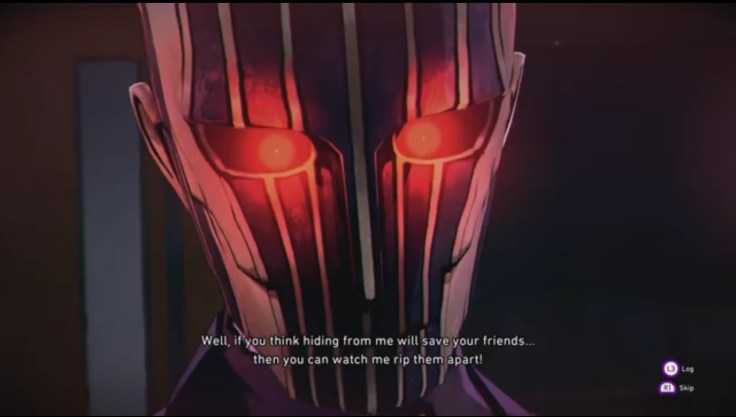
Boss fights in this game range from being, at best, monotonous and/or tedious and, at worst, straight up reskins. Fighting various Summoners, such as Iron Mask or Ash, gives the same general dynamic. They bring forth two or three Demons that have been seen in droves by that point of the game, but the only way to win is to actually bring the Summoner themselves to zero HP. You can take out the Demons as many times as you’d like, but they give no loot and will simply be resummoned, so there’s no point attacking anyone but the Summoner, ever. Because Summoners make up the bulk of boss fights in this game, that hampered the experience significantly.
Fusions

Out of all the things to show up under this section of the game analysis, Atlus missing the mark on Fusions is the most unforgivable. To be fair, the surface level idea of Fusions hasn’t seen any direct changes from the rest of the franchise. You get your “Velvet Room”, the Cirque De Goumadden, and it works exactly as you’d expect. Grab two Demons, fuse them together and make a new Demon. The new Demon can naturally inherit skills from the two being fused to make it, so the direct and simple concept of Fusions is the same here as SMT and Persona.
Fusions were sadly a victim of changes around the game. For one, the player begins the game with four skill slots instead of eight, and though they’ll eventually acquire a full eight by the end of the game, this makes early to mid game Fusions virtually meaningless and greatly hinders the experience all on its own. Second, there are less Demons in this game, so in practice, there are less interesting combos to be made into newer Demons. Demons available for fusion likely have already been acquired, or can be acquired in 30 different other ways, making them less special.
Although the Fusion experience shapes up by the end of the game, this was change for the sake of change around the mechanics that made it a lot less interesting to use and explore.
The Story
While Fusions falling by the wayside was the biggest letdown, this game’s most well defined shortcoming would have to be its poorly handled story. Unlike Persona games, where characters join the “team” through the plot organically, this game uses the plot to force characters to join. Arrow, Milady and Saizo were basically wedged into the game so that the player could have a party from the get go. Their points of entry are all the exact same; there is no meaningful build up, these characters aren’t established into the plot at anypoint, they more or less just get dumped into the party and that’s that.
The only meaningful character development that takes place at any point stems from within side content. Specifically, Hangout Events and traversing the Soul Matrix provide the only depth to any of our cast that you will ever see.
Towards the end of the game, we finally see a respectable semblance of a moral. It only ever actually manifests during the game’s “True” ending, which isn’t even possible to achieve until New Game+. The ‘True Ending’ resembles the mood and general dynamic of Persona 3, with nowhere close to the actual emotional impact. We don’t care anywhere near as much about Ringo and Figue as we did Makoto Yuki and Aigis. There’s simply nowhere near the same level of build up and character development. Because it’s locked behind New Game+, it’s possible and maybe even probable that most people wouldn’t bother going after it in the first place.
Overall, Soul Hackers 2 was seemingly only developed with any real thought going towards the admittedly cool general neon and vibrant aesthetic seen across most of the game. That is to say, there’s a whole lot for showing without any real telling at all. As such, this game gets a grade of a D. You will only enjoy this game if you’re an SMT fanatic who is lacking in anything else to play. Even then, you can do a lot better. If this is the best the Soul Hackers series has to offer, then perhaps it’s best we only get one entry into the franchise every twenty four years.
 InReview
Leave a comment